

















Students at Poly Prep have become less engaged in politics and current events because of the increasingly polarized society we live in as a result of the increased usage of social media. It is crucial that students explore official news outlets and inquire about the courses Poly offers to develop their own political perspectives rather than just repeating someone else’s perspective or a general headline.
According to Mental Health America, a non-profit organization dedicated to promoting mental health, the amount of Americans receiving their news via social media is over 50%.
According to Pew Research Center, “Young adults follow the news less closely than any other age group. Overall attention to news has declined since 2016 and the youngest age group has remained consistently at the bottom…At the same time, there is one place where young adults are more likely to get news than any other age group: social media.”
The personalized algorithms on social media platforms has led to users losing insights on opposing perspectives, creating echo chambers in which influencers can spread misinformation and extreme biases, while simultaneously disregarding the facts that would exist in a journalist’s article in an established organization’s print.
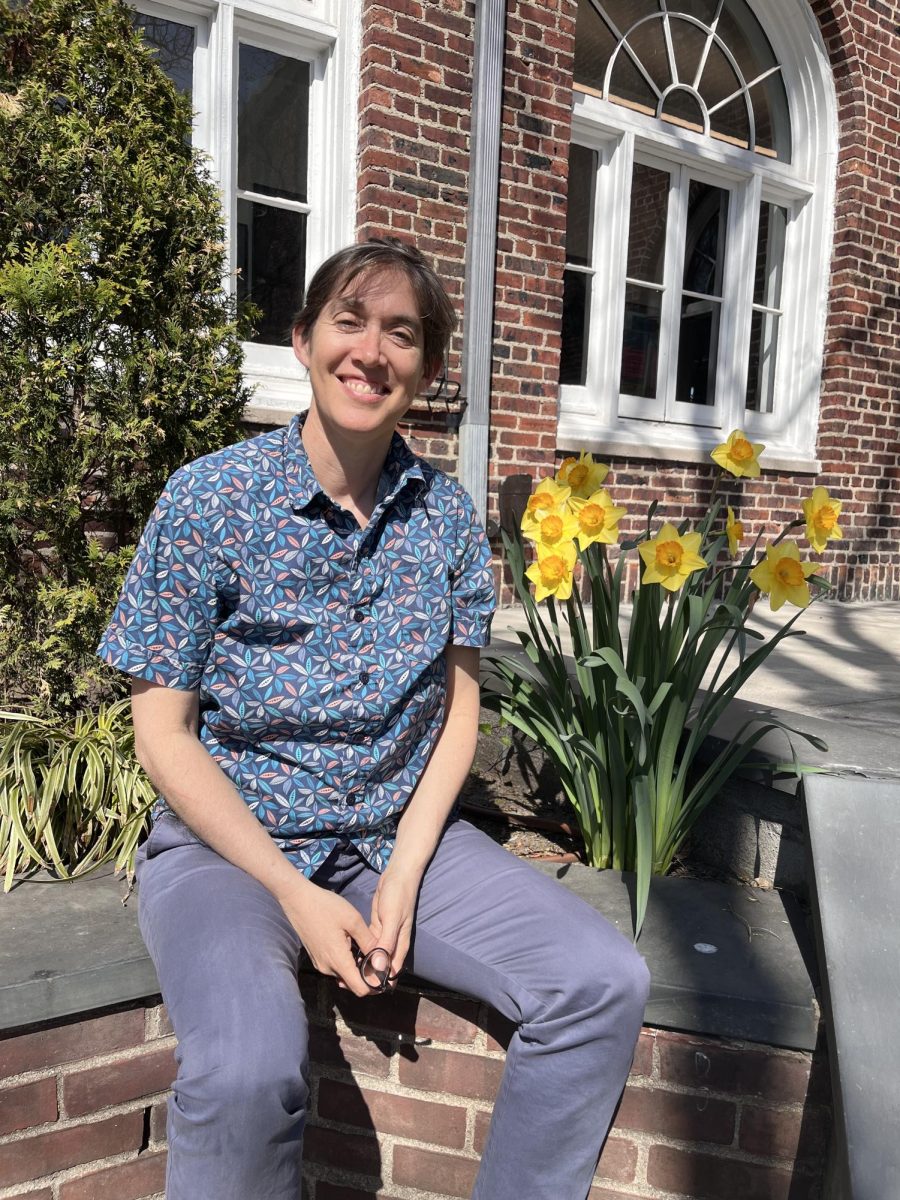
Jean Belford, Computer and Information Science Department Chair, said that because of society’s increased polarization, students have become hesitant to engage in discourse and have turned to social media instead. The downside, according to Belford, is that, “students run the risk of believing that a short reel or video on a social media site allows them to have been educated on a topic. I don’t think that they realize that content lacks all context. Historical context, political context, [and] cultural context.” Additionally, social media prevents students from formulating their own opinions as they are led to believe misleading and untrustworthy information, leading to disconnects within conversations and major gaps in political knowledge.
For example, a survey sent out to the Upper School and Faculty on April 13 received 47 responses and found that, students and faculty alike, had noticed that about half of the students at Poly understand global events and are aware of what’s happening beyond their bubble, while the other half are alarmingly oblivious. Whether it’s a lack of interest or blatant obliviousness, students are missing essential knowledge on current events.
An issue, however, is that many students believe that they are aware of the current political environment both within the U.S. and outside of it. Respondents to the survey and I seem to both acknowledge that there are students who engage with the news; however, it has become increasingly apparent that many lack a basic understanding of the events shaping today’s politics.
According to Belford, “classrooms have become quieter and outside of the classroom has become a bit more chilled.” The survey garnered a unanimous aspiration among both students and faculty for Poly to become ‘more political’ as a whole.
Now more than ever, our students should be engaging in today’s world, not hiding from it. For students looking to enhance their civic engagement themselves, the most common advice is to research and read articles from trusted sources and regularly engage in conversations with friends and family.
Additionally, according to the University of Georgia, taking political classes “teaches students to assess information objectively, consider multiple perspectives, and make well-informed judgments. These skills are invaluable in various professional fields and everyday situations, fostering a more discerning and open-minded approach” in society as a whole.
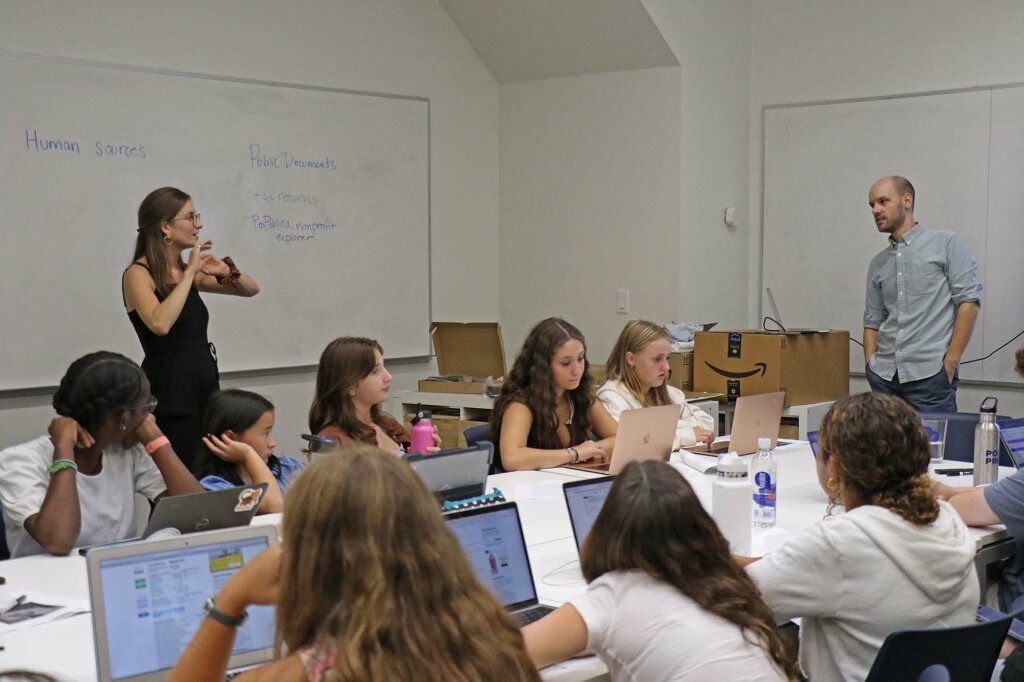
Belford has noted that there are classes at Poly that can help students develop this mindset and media awareness. “Disinformation and Democracy teaches students a great deal about where to find good research, whether it be scholarly studies determining website credibility…[or] digging deep[er] into social media posts,” said Belford, “Schools are a place for deep, thoughtful debate and it’s really important that young people engage in this process.”