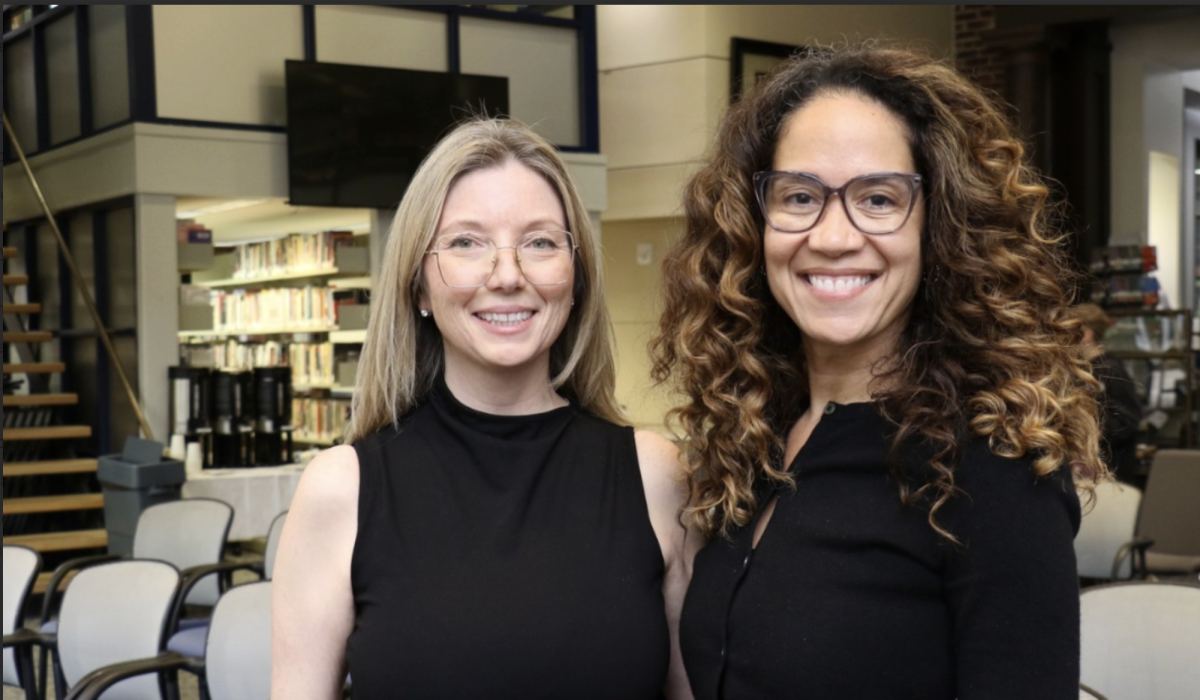










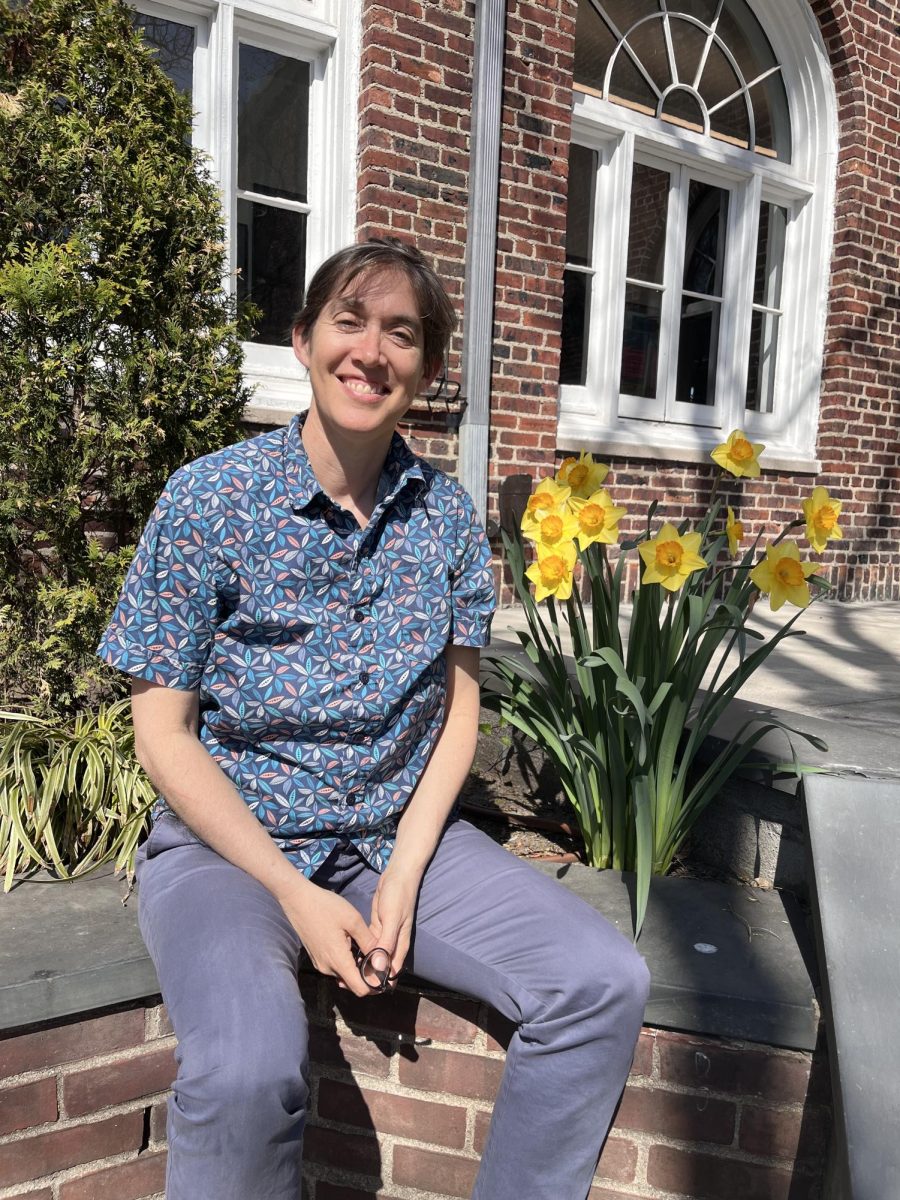
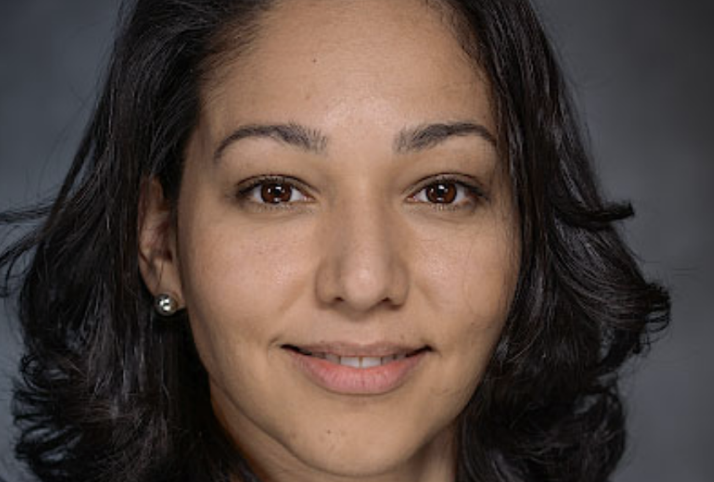






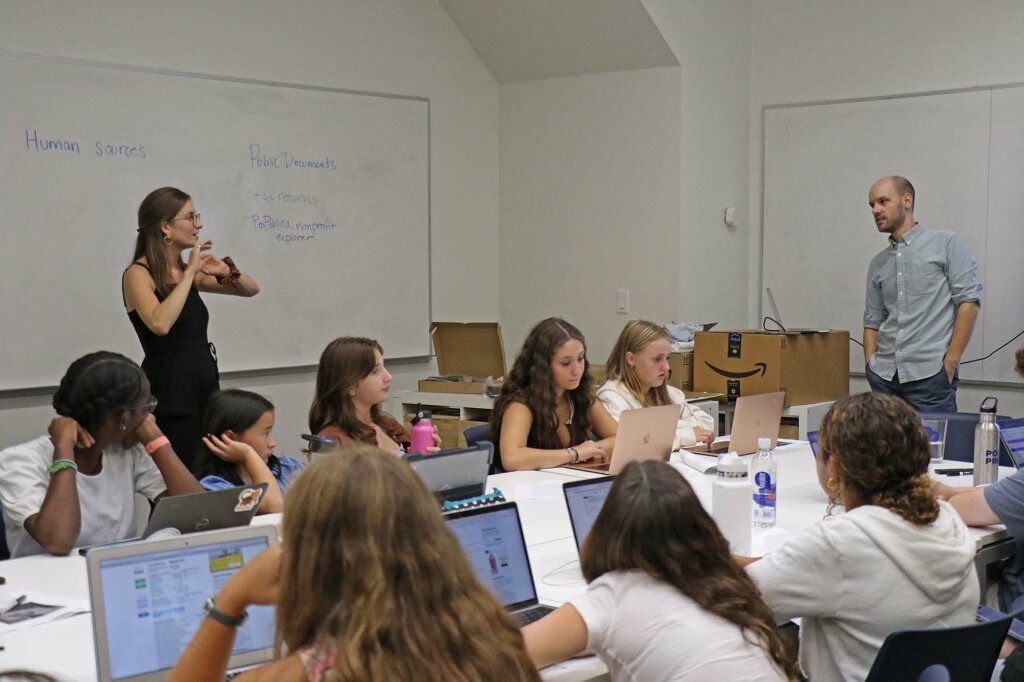
After five years of teaching journalism and leading the Polygon, Rachael Allen, faculty adviser to the Polygon as well as Media Studies and Journalism Faculty, will be leaving Poly at the end of this school year and closing a chapter that has reshaped how students approach journalism. Since arriving in 2021, Allen stated she has transformed the Polygon from a “small, unstructured, and inconsistent club” into a large, structured, and influential publication with “nearly 50 staff members and multiple branches.”
When Allen first joined Poly during the COVID-19 pandemic, the program lacked stability. “[The Polygon] didn’t have a print [edition]. It was students meeting on Zoom and trying to get articles together that way,” said Allen. “They were definitely [scattered] in the previous two years, especially because they had transitioned through two [faculty] advisors. There just wasn’t consistency.”
However, Allen entered with a clear vision. “It’s super rare to have a teacher who does journalism full-time…so I was really excited about creating a complete program,” she said. In a 2021 interview conducted by Seanna Sankar for the Polygon, Allen articulated her goals for the paper: “More self-reliance—I think that’s the ultimate goal,” she said. “I’d like to just make it bigger and have more pockets so more students can feel like they have a part.” Five years later, that vision has largely been realized.
Today, Poly’s journalism program has succeeded at extending far beyond just the Polygon. “During her tenure, so many students have felt emboldened to embark upon journalistic endeavors: the Morning Devil, the Poly Pod, [the Polyglot, the Blue Devil briefing,] and the Poly Record are just a few keen examples,” said Co-Editor-in-Chief Brianna Sylvain ’27.
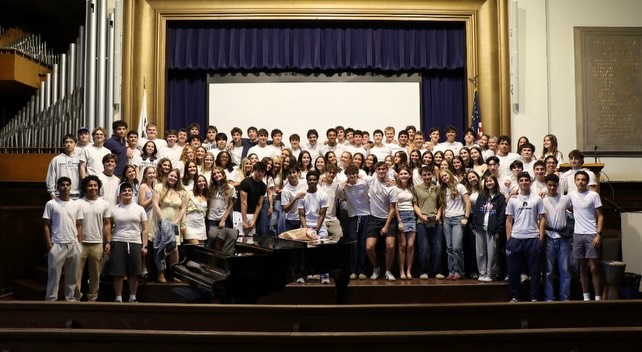
The Polygon itself has seen the most dramatic growth and revival in both size and organization compared to just five years ago. What was once a staff of exactly 18 students has transformed into a 48-member staff, not including the myriad of contributing writers, according to the 2021 and 2026 Polygon mastheads. “People have specific responsibilities and roles and know what they need to do,” Allen said. According to former Layout Editor Dov Elul ’24 in his Polygon Article, “How the Polygon is Returning to its Former Prestige,” “since [Allen] joined Poly, some of the positions added include a layout team, a copy editing team, [a marketing team,] DEIB editor, business columnist, art critic, breaking news editor, and even a cartoonist.”
Journalism students say that these changes have directly influenced their experiences. “Allen is the foundation of both my love and knowledge of journalism,” said Sasha Londoner ’27, current News Editor and In-Depth Story Editor for the Polygon, in an email to the Polygon. “She alone has made the Polygon organized, efficient, and rigorous, making my experience in journalism both enjoyable and intensive.” Londoner also added that Allen “inspired [her] to pursue investigative stories and approach difficult topics with nuance and honesty.”
Journalism student and Polygon Chief of Digital Media and Marketing Isabel Warwick ’28, also commented on Allen’s impact: “Before I took [Allen’s] class, I had no interest in journalism or writing at all. But, once I joined her class, I started reading more journalism and I realized how important it is in society and politics… and learned journalism was far more than just news and information,” she said via an email to the Polygon. “It could be fun and focus on topics I find genuinely interesting—instead of just current events. From this experience, I realized I really love journalism and now, it’s a field I’m seriously considering going into.”
Building on Londoner’s experiences, another key part of the Polygon’s transformation is thanks to Allen’s focus on journalistic ethics and professionalism. Early in her tenure, students created a formal editorial policy, later reviewed by the Student Press Law Center, outlining the paper’s standards and mission shared with the Polygon, according to Allen. In the same overview, it was mentioned that a 100+ page staff manual and a rigorous fact-checking system modeled after her previous experiences at The Atlantic was introduced. “It literally means checking every single word in an article, going back to sources and confirming that their quotes are accurate… and that they weren’t taken out of context,” said Allen.
These systems have made it possible for students to take on complex, controversial, and sensitive topics while retaining trust within Poly. “I think [in-depth fact-checking]…has made the Polygon have a higher standard of stories,” Allen said. “But also, hopefully build trust within the community.” Londoner echoed this impact, recalling a moment when Allen guided her through concerns about a potentially biased article. “Rather than shy away from this conflict, Ms. Allen gave me both immediate and long term instructions… ensuring that if published, the story would adhere to Polygon standards,” she said. “The professionalism with which she addressed this difficult situation reminded me that preserving journalistic integrity… is an honest process.”
Moreover, Allen has worked to integrate journalism more deeply within the school through the introduction of dedicated Polygon classes and outreach programs. “She has integrated the Polygon club with the Journalism class, which has streamlined and standardized stories,” Londoner said, “leading to the Polygon’s increased rigor and quality.” Beyond the Upper School, Allen’s system has allowed for more connection to the Lower and Middle School journalism programs, through mentorship and shared coverage, according to Allen. Additionally, the Polygon now reaches over 200 families and alumni through a student-led subscription service, reinforcing its role as a community newspaper.
Allen’s efforts and influence have also extended outside of the classroom. Students have collaborated with professional organizations such as the New York Times, visited major media offices, earned national awards, and even published a book on Poly’s history, according to Allen.
These opportunities exposed students to professional journalism and helped shape the Polygon’s growing culture of rigorous and ambitious reporting. After NYT Magazine Staff Writer and journalist Emily Bazelon visited Poly to have an interview in 2023, former journalism-class student Charlotte Roberts ’24 stated, “as a student journalist myself, I sometimes find that I have doubts about my work, and it was helpful to hear that someone as successful as Bazelon has also experienced that.”
Despite these various accomplishments, however, Allen remains modest and consistently emphasizes that the Polygon’s success belongs to the students. “The whole point of a student-run newspaper is that it’s run by the students,” she said. “Students learning leadership, collaboration and independence [shows] the paper in its best form. The paper doesn’t need me.” Instead, she hopes that students who join are left with one lasting ability: “The ability to ask good questions—smart questions about the world around you… even when it’s your own community.”
This ideology can be observed in the leadership positions in the Polygon. “Allen has given me the freedom to discover how I am as a leader. She was, for the most part, hands off when it came to making decisions about the staff, which allowed me to figure out how I can best lead the paper alongside Carolina,” said former Editor-in-Chief Lila Daniels ’26. “[Carolina and I] had a say in almost every part of the production process so I felt like each issue was a unique representation of our leadership, combined with the hard work of everyone on the staff. However, there were standardized guidelines we had to follow which kept the paper professional and similar to newspapers across the country.”
Upon leaving Poly, Allen will be moving to Boston to be closer to her family and will take a position teaching English at the Rivers School. “If my family was in New York, I would stay here forever,” she said, “but my family is in Boston and I miss them.” While she hopes to remain connected to student publications, her main task will be related to English, aligning with her academic background. “I’m currently getting my MFA in fiction. My personal ‘writing love’ is fiction,” said Allen. “As much as I love guiding student journalists, I’ve shifted away from pursuing journalism myself and now [I’m] pursuing literature.”
Her departure from Poly leaves uncertainty within the Polygon, especially as a new advisor has yet to be announced. “I hope for the best,” Londoner said. “But, [I] ultimately know that it will be very difficult and near impossible to find an educator as patient, insightful, and organized as Ms. Allen.”
Allen, however, remains confident that the publication will remain successful, even after her departure. “It’ll be great,” she said. “The Polygon will continue on just fine.” Even so, she acknowledged how difficult it will be to say goodbye. “I’ll miss the students… and the newspaper so much,” Allen said. “It’s grown to be such a wonderful community.”
As Poly prepares for this transition, Allen’s legacy is already clear. It can be seen in the structure she has built, the standards she has set, and the students which she has inspired to carry her vision of journalism forward. “[Allen] has been one of the kindest, most welcoming, and most helpful teachers I have ever had,” said Warwick. Her sentiment is shared schoolwide, and Ms. Allen will be missed dearly.