



















A teacher’s job typically focuses on enhancing students’ learning in a singular subject. However, many Poly teachers choose to take courses alongside students to broaden their own knowledge, giving them the chance to learn as a student rather than just as an educator. Experiences in the classes they’ve chosen to take differ, but one unifying theme runs through all of these faculty’s stories: learning as a student has affected their teaching styles and outlooks on teaching in general.
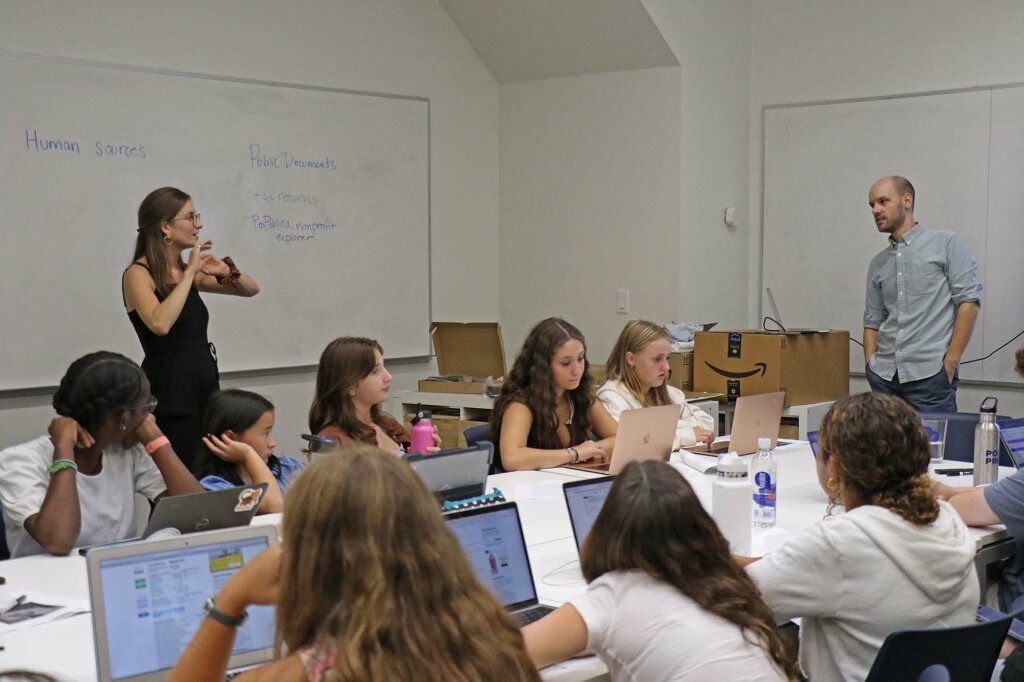
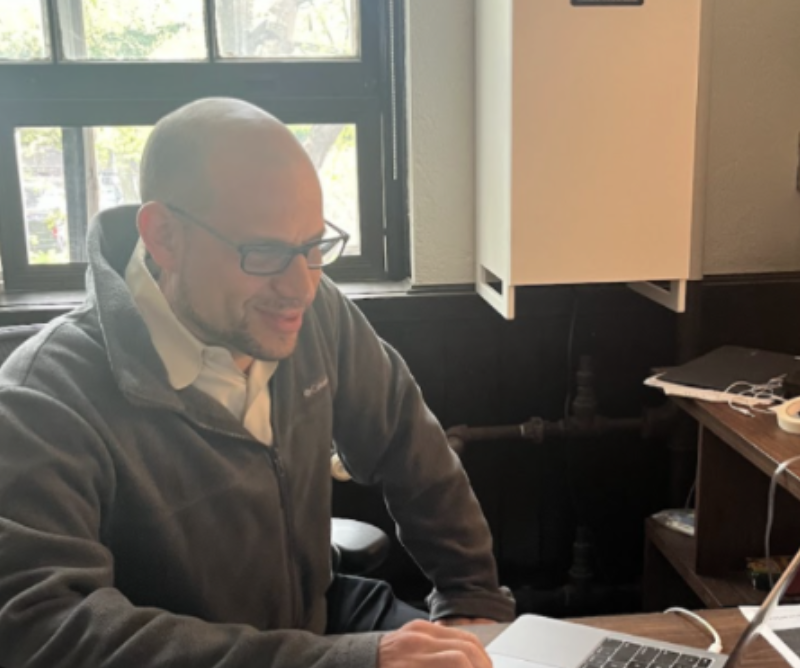
For Upper School Computer and Information Science Faculty Dylan Klett, photography has always been intriguing, but is an expensive hobby to maintain outside of Poly. However, by taking Poly’s Digital Photography class, Klett has been able to use school equipment to further explore his interest.
Learning more about photography is not the only thing Klett has enjoyed while learning under Visual Arts Faculty Adina Scherer. “It’s really fun to be the one who answers all the questions instead of having to be the authority. It’s fun to be alongside the students, as a beginner, as somebody who gets to ask questions instead of answering them all the time,” he shared.
In terms of the technology used, Klett’s experience with manipulating digital information in his area of expertise has helped inform some of the skills necessary for the class. Yet, he still considers himself a beginner in the subject due to its vast artistic qualities and how each photograph prompts him to ask: “where is the value in the beauty here?” Klett marked this aspect as one he enjoys deeply from his time in Digital Photography.
Mathematics Faculty Linda Russo’s experience of taking Italian under World Languages Department Chair Elisabeth Mansfield has taught her similar lessons. According to Russo, she had always felt drawn to Italian culture, partly because of her husband’s Italian heritage and partly because of her desire to visit Italy in the future.
Originally, Russo thought the lesson she would receive from taking Italian would purely consist of learning the language. Yet, after taking the class, she feels more in tune with her students’ emotions, as she can now relate to them on a deeper level. She described a few of her experiences of being an Italian student as: “oh my gosh, I don’t feel like I want to go to class. Oh my gosh, I’m late. Oh my gosh, there’s a quiz. Did you do the homework?” Russo goes on to say, “it’s really interesting to ask, as a grown up, ‘how am I going to have the energy to sustain this?’ As you observe the things [students] go through regularly with all these different subjects, as a teacher, it’s really good to step outside yourself and your own discipline to acknowledge their struggles.”
As for Mansfield’s experience of teaching her coworker, she complimented Russo’s learning ethic. “She’s so busy teaching her own classes that she’s really going to put in 100%. Ms. Russo puts more effort into her work than most students that I’ve ever taught,” she mentioned.
Poly Prep is not the only school that promotes further learning for its staff members. Different schools have also recognized the benefits of faculty learning alongside students. Charley Stern, a teacher at Proctor Academy—a private boarding school located in Andover, New Hampshire—spoke of his experience sitting in on classes with students. “If we find time in our busy schedules, we faculty can become students at Proctor by sitting in on classes, collaborating across departments, and guest teaching when the subject in another classroom aligns with our own field of study,” he wrote in a public Proctor Academy blog.
In other articles, various teachers speak of how experiencing what their students go through can improve their relatability, thereby improving their teaching. According to Tim Cavey in the Teachers on Fire Magazine, “[Sitting with students] reinforces the notion that despite the differences in age, experience, and expertise, we’re all learners. In that sense, I belong in a student desk as much as anyone.”
Head of Upper School Sarah Bates echoed the same sentiment. She has begun to take Digital Photography and shared in an email to the Polygon that being a part of the class “has helped [her] tremendously to be “in [students’] shoes” even if it’s just one class.” Having that relatability with students can greatly strengthen connections with teachers and change an educator’s outlook on how they teach. Each faculty member who has sat in on classes with students reports that their experiences not only satisfied their interest in a subject, but also benefited their student-teacher relationships by allowing them to be a student once again.