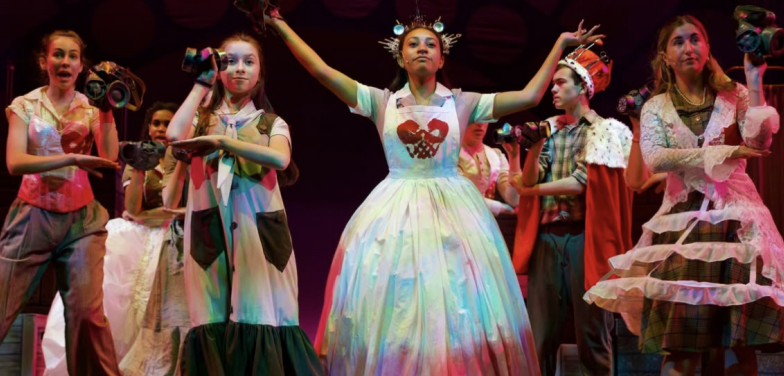
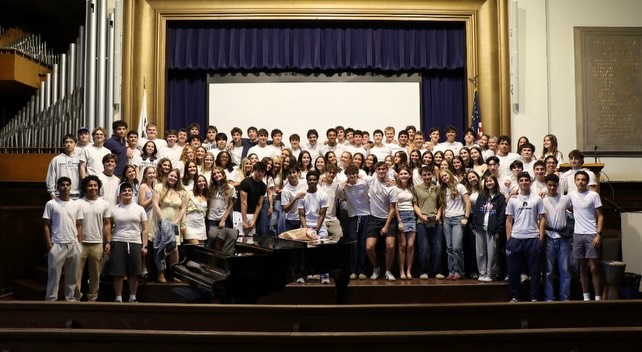
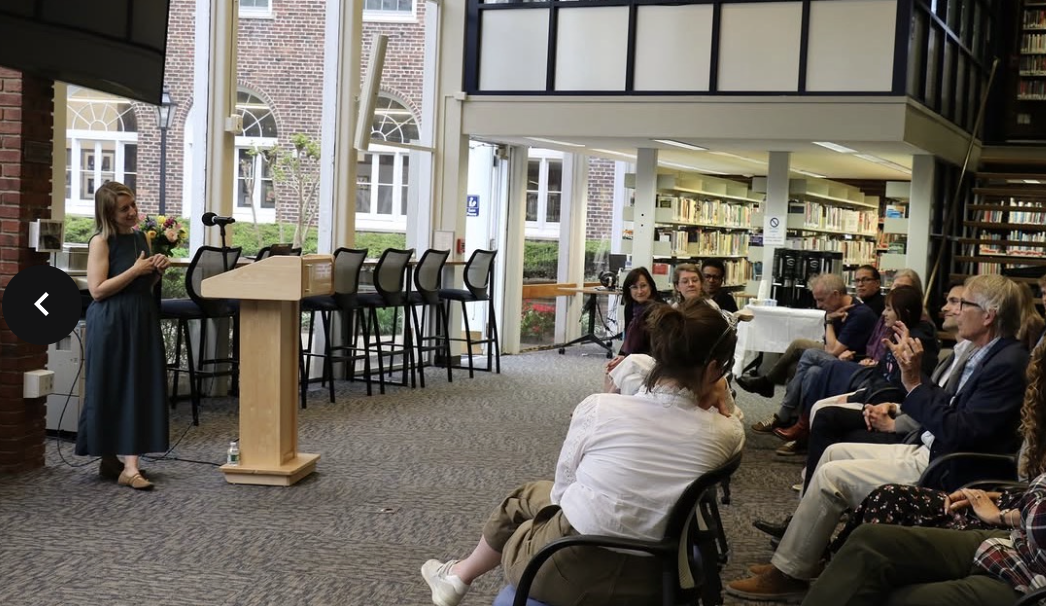





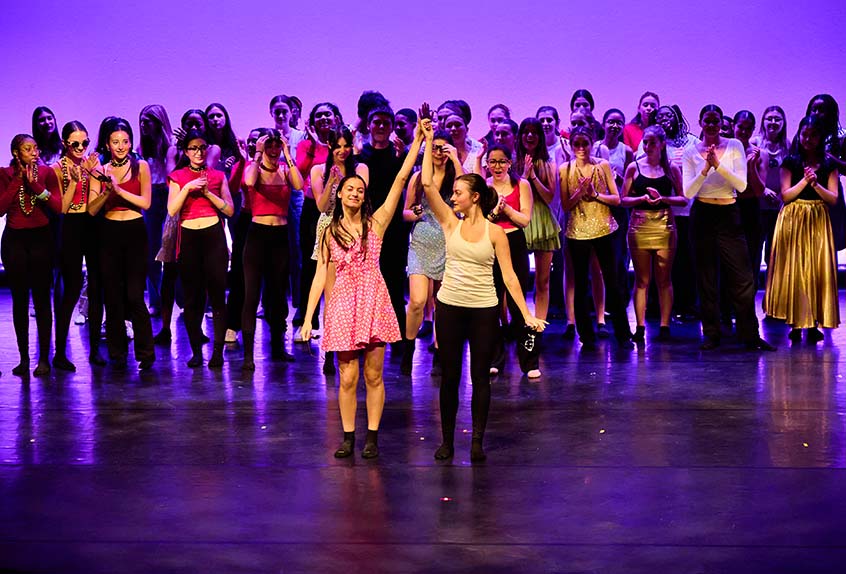




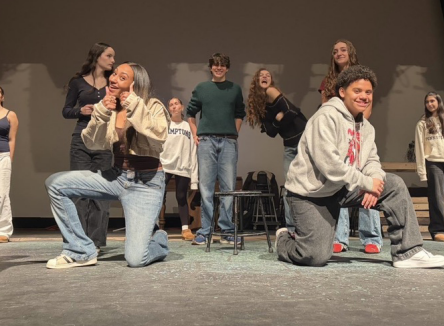




Featuring songs from musicals such as “The Waitress,” “Tick, Tick… Boom!,” “Hadestown,” “Next To Normal” and “The Notebook,” Poly Prep’s third annu- al Cabaret on Thursday, May 14, promises to be a show to remember. In preparation for this event, students interested in participating attend bi-weekly rehearsals to learn musical theater songs, each relating to a certain theme chosen by Performing Arts Faculty Mariko Watt each year, this year’s theme being “dream songs and roles.” As described by Chloe Einaudi ’27, “the musical and the play are two very big productions, however the Cabaret is more chill,” highlighting a key difference between the feel of this event and other theater performances at Poly.
According to Watt, while the Cabaret first began in 2024, the inspiration for it arose in 2021 when one student, Charlotte Knutsen ’21, hosted a similar event for her senior capstone project. Students, including Zeke Wise ’24, were invited to perform in solos and groups, giving them an extra opportunity to perform on stage with their peers after the larger shows had been completed for the year. Inspired by Knut- sen’s idea, Wise held a second Cabaret as a part of his senior capstone three years later. “[Many] people were very excited about it,” said Watt, “they said [the Cabaret] was a really great thing to have after the musical. Once we hit spring break, there was nothing else for our school to do in terms of musical theater performance. So, I decided to continue with the Cabaret to allow people to sing musical theater songs that they might not have known before.”
Some of the performing students agreed about the Cabaret’s significance. “It’s nice to have something smaller at the end of the year so that you can reconnect with your friends from the musical or from the play,” said Einaudi. “We can get to know people on a different level than in other productions, creating that sense of community that is really strong in the cabaret,” said Lucy Fleishhacker ’28.
Alex Arniotis ’29, chose to partici- pate because he “will be able to spend time with my friends, while also gaining a better understanding of theater and musicals at the same time,” as he put it. Oth- er students chose to perform for a similar reason: to learn and grow as theater per- formers. Einaudi said, “Going through my theater journey, I don’t think I’ve por- trayed a very serious role yet…and I think that the Cabaret serves as a good practice to try something difficult with the [type of song] that you are going to [sing].”
While the two main productions of each year require memorizing lines and dances as well as the songs, the Cabaret focuses solely on singing. As a result of this simpler structure, many students find that the Cabaret is more “freeing” in comparison to these larger annual productions due to the lack of a script to follow, as Einaudi described it. According to Watt, “[Cabaret] is really just an opportunity to stand and sing, to do more solo work and learn how to sing in harmonies.” She furthered, “For me, this is also a really good opportunity to hear more from people that I didn’t hear as much from in the musical.”
Throughout the course of a year, students interested in music and theater spend months performing and rehearsing together, eventually forming bonds with one another. The productions’ casts “are going to miss all of the seniors [when they graduate in May], so [Cabaret] is a great opportunity to do the things we love with the cast that we became a family with one last time,” said Arniotis.