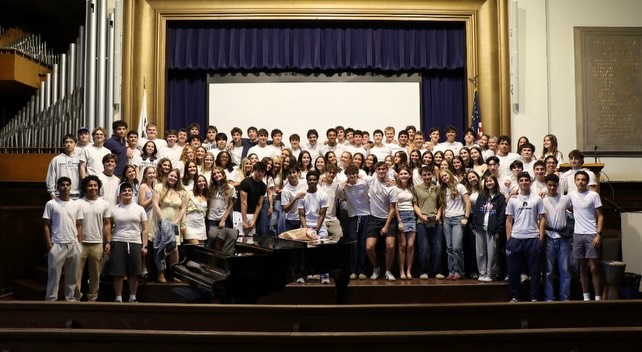
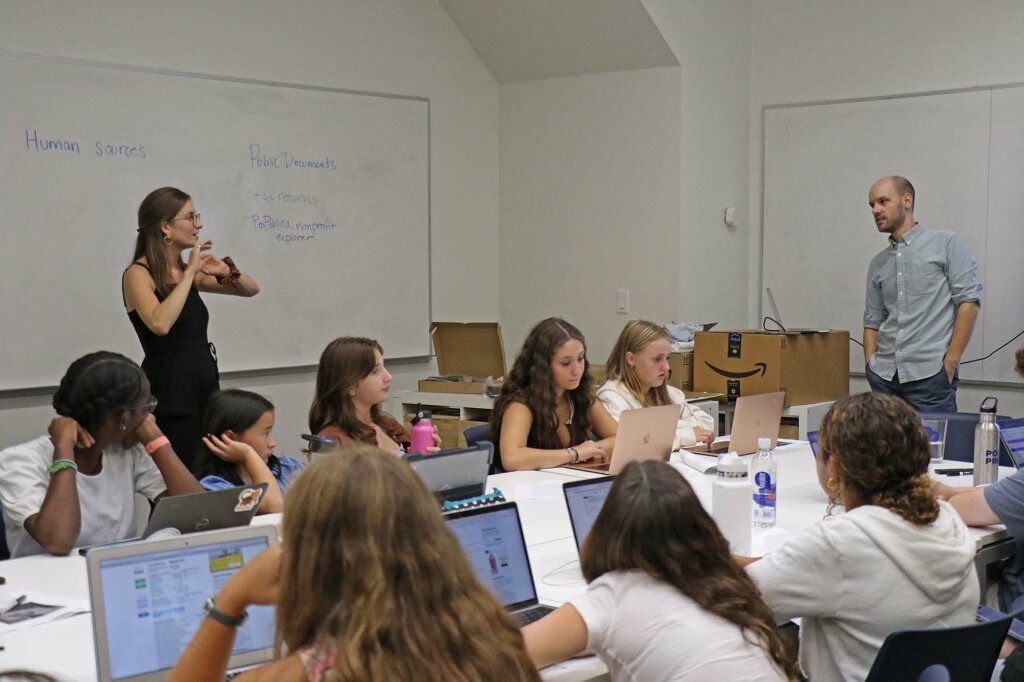

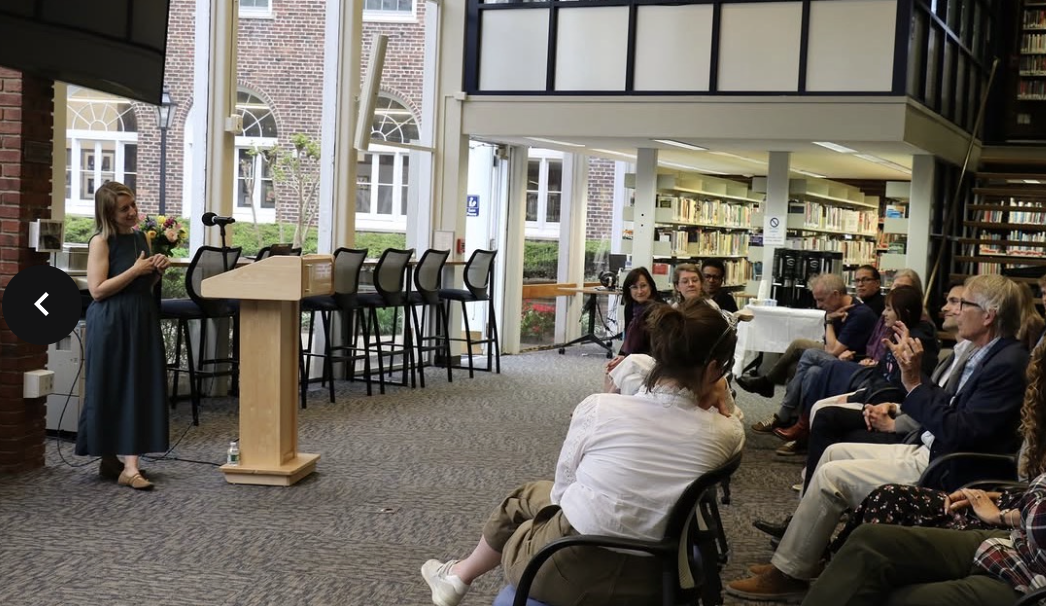



















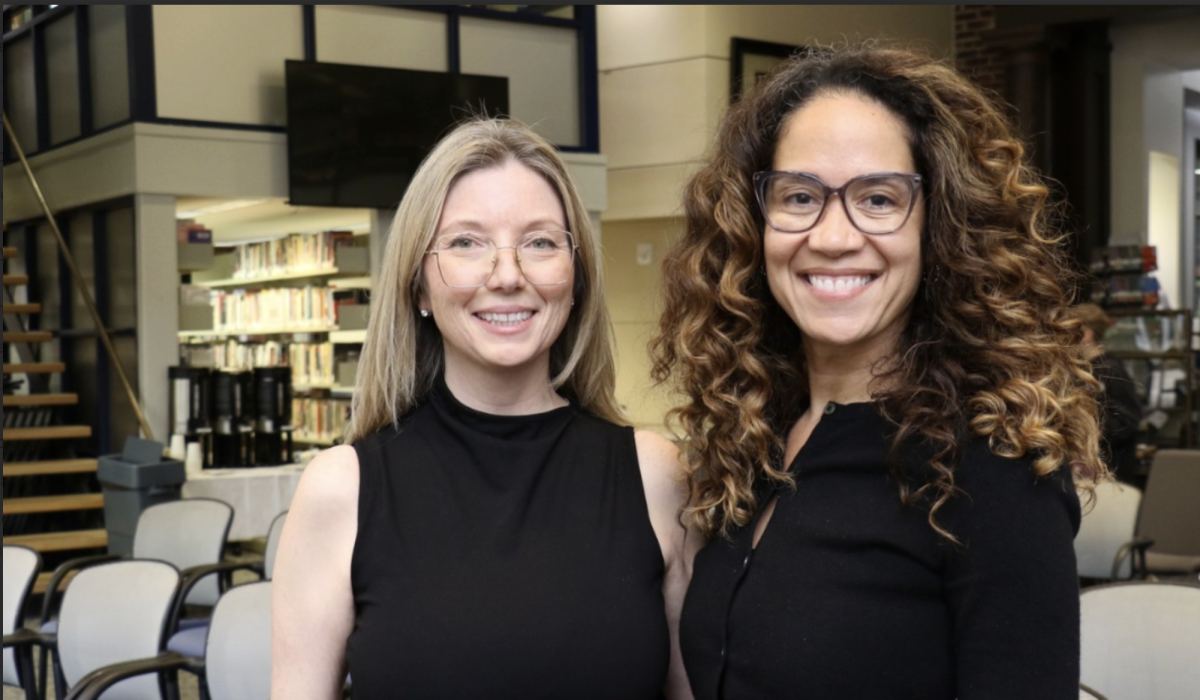
Jean Belford P’24, Computer and Information Science Department Chair, held a Livingston Lecture on May 13 regarding AI and its future effects on democracy. Her lecture was structured into two halves. The first focused on the risks AI posed to voter manipulation via deepfakes — AI generated videos—, conspiracy theories, and AI keeping people in “biased bubbles, [which] polarize society,” according to Belford. The second half of her lecture discussed system manipulation: the government’s use of AI to sort through data and identify people who move between states, die or are double voters.
Belford mentioned the first attempt at using AI to help elections was through “interstate cross-check” where AI singled out suspicious cases. When its data came back, it had removed 200 people for every one that actually needed to be removed from the voter rolls. Belford recognized flaws in the system of interstate cross-check. Belfore said, however, that it “ was replaced by a system much more reliable, called the Electronic Registration Information Center (ERIC).” This system proved to be much more efficient and helpful. ERIC added a new feature as well, which recruited people who hadn’t been voting to vote again.
According to the ERIC website, “ERIC provides its members with reports that identify inaccurate or out-of-date voter registration records, deceased voters, individuals who appear to be eligible to vote but who are not yet registered, and possible cases of illegal voting.” With over half of the states using ERIC, the system now has access to motor vehicle department data, official death data and the US Postal Service.
ERIC aided each state utilizing the system to compare its voter roll to the other participating states. This system allowed them to catch any illegal voters or ineligible voters. Belford gave an example of two people with the same name and the same social security number marked as living in two states. It is safe to assume from that information that the person should be taken off the voter roll of the state they lived in last.
Head of Technology Charles Polizano said, “10 years ago, video was evidence. If there was a video of something happening, you couldn’t say it didn’t happen … We’ve completely eroded that trust now with what AI can do.” Polizano mentioned “deepfakes” (AI-generated videos with the intention of misleading viewers), which have caused turmoil in many recent elections with the evolution of AI. AI can mimic voices accurately and create life-like videos that can persuade citizens to change their votes.
According to Cornell University researchers, “A short interaction with a chatbot can meaningfully shift a voter’s opinion about a presidential candidate or proposed policy in either direction.” Their studies showed that after speaking to bots, most people are inclined to change their opinion. Citing experiments like chatbots influencing a shift in opinion in 10 percent of 1,530 Canadian voters. A Cornell professor, David Rand, worked with the U.K. AI Security Institute to track the opinion shift in 77,000 participants.
“[AI] knows more than anyone has ever known…about humans in the past,” said Belford. She continued, “now, AI can decide whether or not you vote, whether you’re eligible to vote, and during an election cycle, what messaging you get.” The power AI has in elections has caused Belford to question the integrity of American democracy, wondering if America and its candidates are still standing by its morals of being a fair and free country.
She argued that with the emergence of AI and all the ways it can impact an election, a fair and free election is no longer what it once was. She questioned, “is it a free election if you’ve been manipulated by deepfakes? Is it a fair election if people are no longer eligible to vote?” While Belford’s questions identified uncertainties in this new digital age, she ultimately came to a sobering conclusion: “I think we need to redefine what a fair election is and what a free election is.”