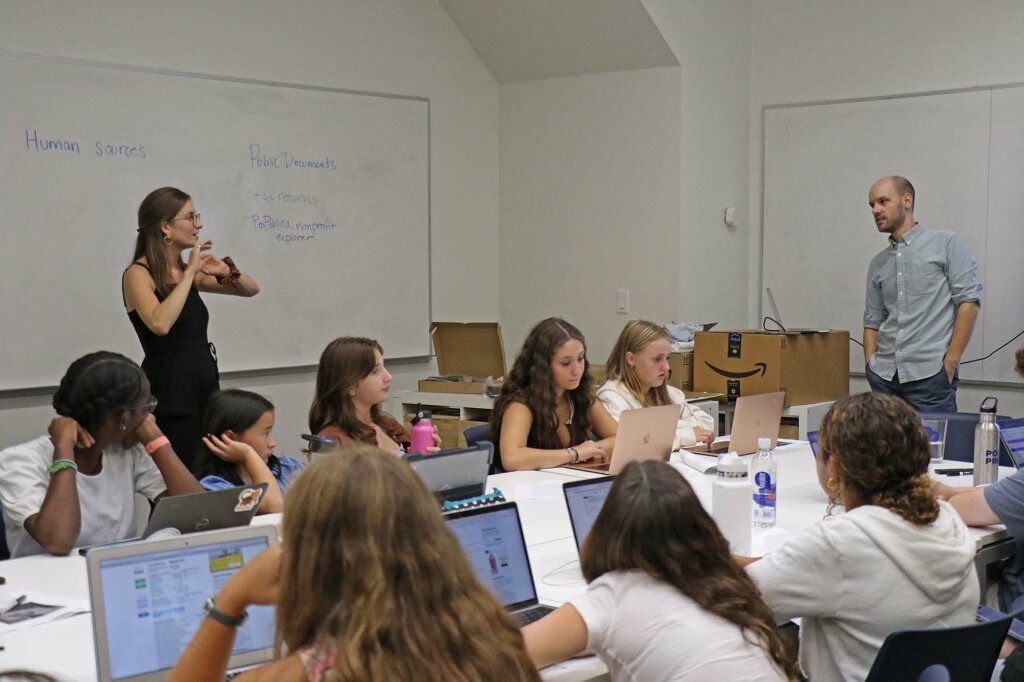
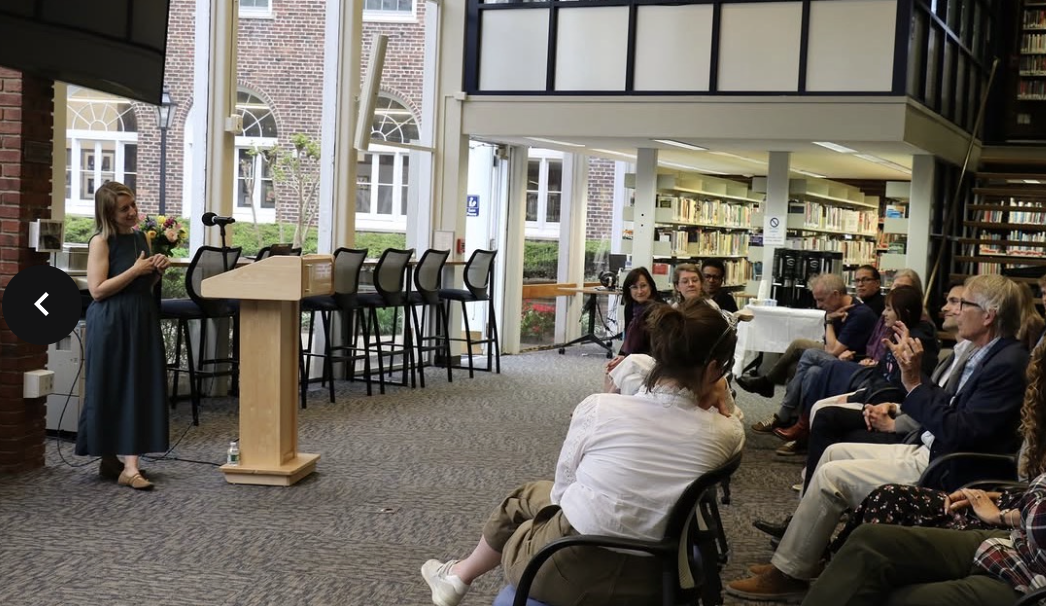




















During lunch, students and faculty filter into a classroom with snacks laid out, ready to discuss historical events ranging from the Rwandan genocide to Venezuela and the United States, as stated in weekly emails from Poly Prep’s History department. What begins as a History Talk, voluntary and primarily student-driven, often reflects what’s happening in Poly classrooms, where current events are discussed alongside the curriculum.
Classroom topics such as Supreme Court rulings or discussions about immigration are ways teachers integrate current events into history classes at Poly. Teachers use them as entry points to help students understand not only what is happening now, but how history continues to shape the present.
“If you’re not talking about current events in a history course, you are losing a great opportunity to educate and teach,” said History Faculty Beth Eby. “What’s so important is for students to feel like the history that they’re learning matters and can feel connected to it, because otherwise they’ll ask themselves, ‘Why do I care about this?’ [We want them to realize] you should care because we’re still dealing with the consequences of those events,” she said.
For many teachers, that sense of relevance is central to their approach. However, they say there is no single formula for introducing current events in the classroom. “There are a few times when I say we need to talk about this because a big thing happened. But for the most part, I try to let students dictate how the conversation goes and the topics we discuss,” Eby stated. She described giving students space at the beginning of class to raise questions about what they have seen or heard in the news. Differently, History Department Chair Virginia Dillon said she primarily sparks conversations about current events through documents and handouts.
Assistant Head of School, Academics, and Former History Faculty, Michal Hershkovitz, explains how she balances conversations about current events when teaching. “There are often good reasons not to stop the curriculum and deal with current affairs so much because sometimes we don’t know how a situation will unfold throughout the world or in our country, we may need more time to understand, or the immediacy of our curriculum takes precedence.” For example, following the killing of Charlie Kirk, Hershkovitz waited “two weeks until [she] found a place where it would naturally fit [in the curriculum] rather than stopping everything in its tracks,” as said in a 2026 Polygon article. “There are always good reasons to make our historical teaching and learning relevant by using current affairs to help understand how we got to a certain place, and what might happen next. But sometimes there’s a good reason not to address current affairs,” said Hershkovitz.
Dillon agreed that teachers must balance responsiveness with the demands of the curriculum, “The history helping students understand the world around them and giving them the necessary context they need.” She continued, “History is complicated and nuanced,” and that she has to teach things that might not seem immediately relevant but are crucial to understanding how they affect our present affairs.
When conversations do happen, teachers say the focus is not on telling students what to think, but on helping them develop the tools to do it themselves. Dillon described this as a core principle of his-
torical thinking. “One of the skills we are training kids in is this very act of making connections,” she says, explaining how students are encouraged to analyze how events relate across time and context.
These skills, Hershkovitz said, often emerge naturally. “I think our students are very smart and perceptive,” she says. “When I would present materials, the students would say, ‘Hey, wait a minute, that is resonant. Isn’t that a lot like or a lot different from what’s going on today?’ And that’s the spark.”
Additionally, Eby says that, with the rise of social media, students are increasingly learning about current affairs from platforms like TikTok and Instagram. “There’s nothing wrong with getting information from TikTok. The question is if [students] know how to verify it.” As a 2023 Polygon article noted, students mainly learn about major global issues through social media, which can be misleading at times. The article emphasized the importance of having spaces dedicated to conversing with each other to become more informed global citizens.
Dillon added that History Talks are an alternative way to learn about current events outside of the classroom. “The history talks are a way for the department to respond to current events in a way that is more immediate and more open.” Topics often emerge from student or faculty interest, ranging from widely covered global events to lesser-known issues that people believe deserve attention.
As history helps us “understand who we are, how we got here and what might yet come,” says Hershkovitz, then bringing current events into the classroom is a part of why we continue to learn and study history and how it affects us today.