














Students know the basic courses in English and History taught at Poly Prep, but did you know about the new and niche classes that have been brought to the Poly curriculum? “International Relations,” as a history elective, has been brought back to Poly after being gone for the past 8 years, and “Satire and Society,” a unique English course, has remained relatively unknown by the Poly community after its introduction in 2023.
Every year, the Upper School Curriculum Guide is updated with fresh classes in every subject. Some of the classes introduced in the past couple years include “Humor Workshop: Reading and Writing,” “Music Composition & Song Writing,” “Comedy in Performance: A Study in Creation, Production, and Execution,” “Magical Realism,” “Satire and Society” and “International Relations.” These courses are not typically part of the high school curriculum, and many Poly students don’t know what they are, or that they exist. Some of these classes are brought back after not running in the past year or multiple years, but many of them are new concepts brought to the department heads by teachers wanting to bring a new course to the table.
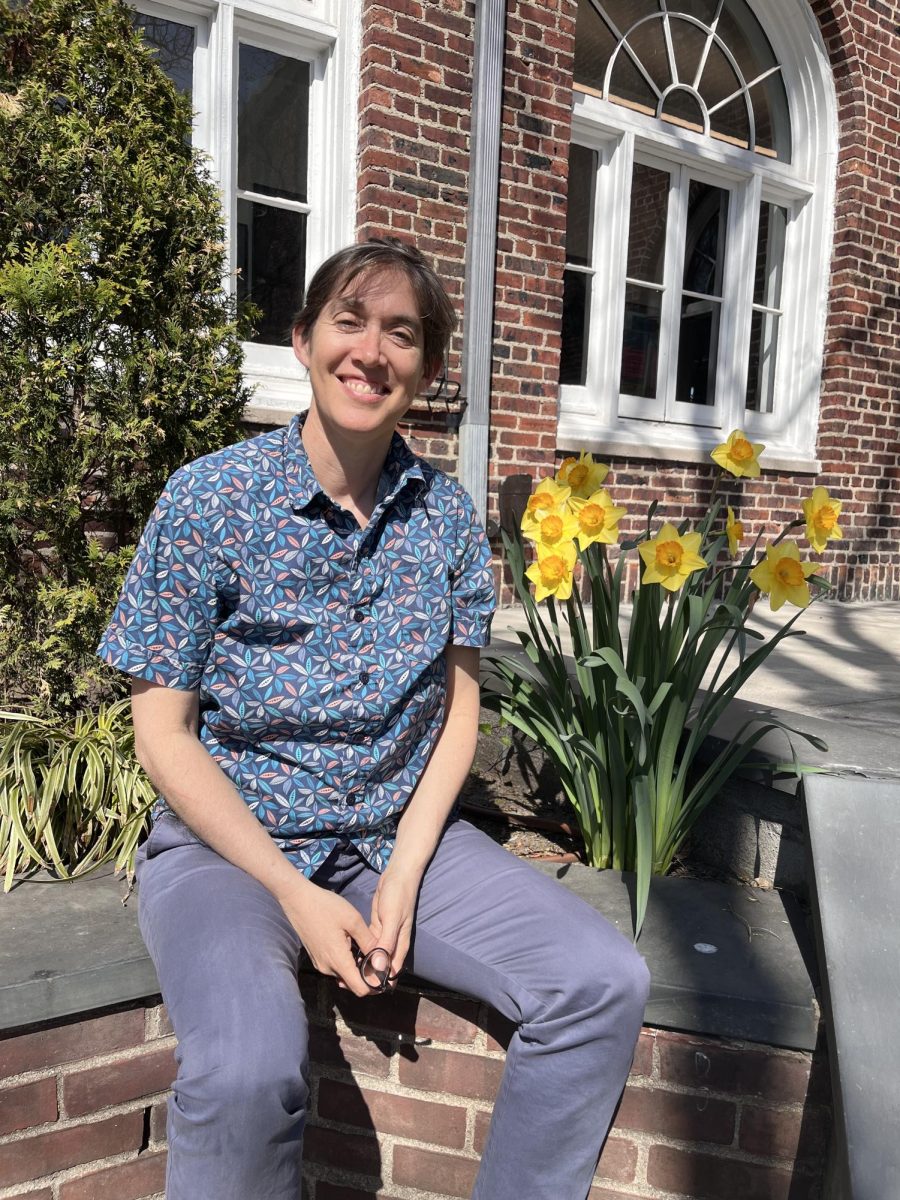
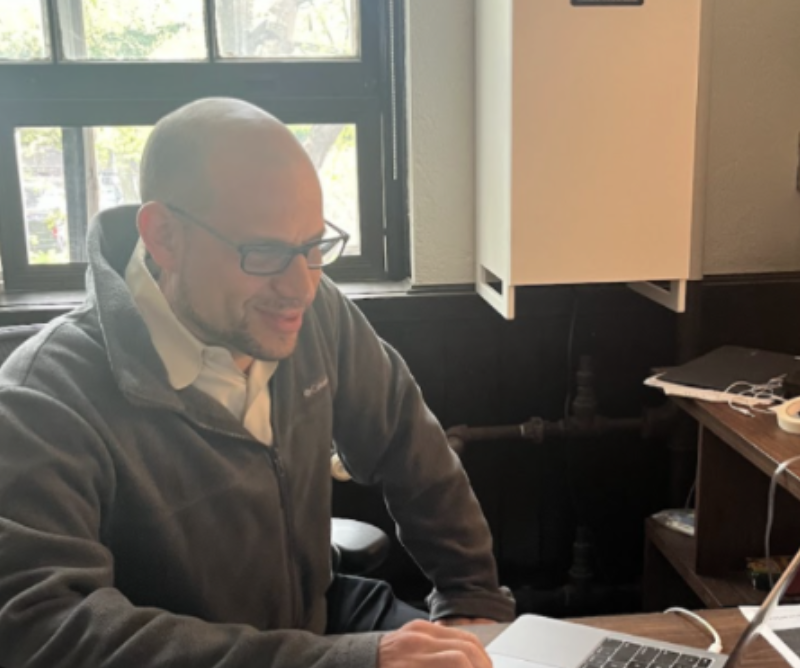
There are a couple different ways classes may get brought into the curriculum at Poly. The first and more common way is a yearly process that begins separately in each department. English Faculty Member, Lee Marcus, described that the class proposals are discussed with Peter and Isabel Malkin Endowed Chair in English Peter Nowakoski in January and February. Teachers are each asked for an abstract of the class, along with ideas for reading and writing assignments. Once these steps are then approved by the department head, they bring it “to the chairs meeting, which…is a meeting of all the department chairs…and [they] discuss all of the new courses that are proposed and decide which ones are allowed to move forward,” explained Marcus.
The other route for classes being accepted into Poly’s curriculum is much more simple and exclusive to classes that have previously existed at the school. History Department Chair, Virginia Dillon, described that bringing “International Relations” to Poly as a class was a quick conversation as it had already been taught in the past, in 2017. “I asked, and they said yes,” she said. Dillon added, “it wasn’t a very hard sell [because] it’s…been a regular part of our curriculum at different times.”
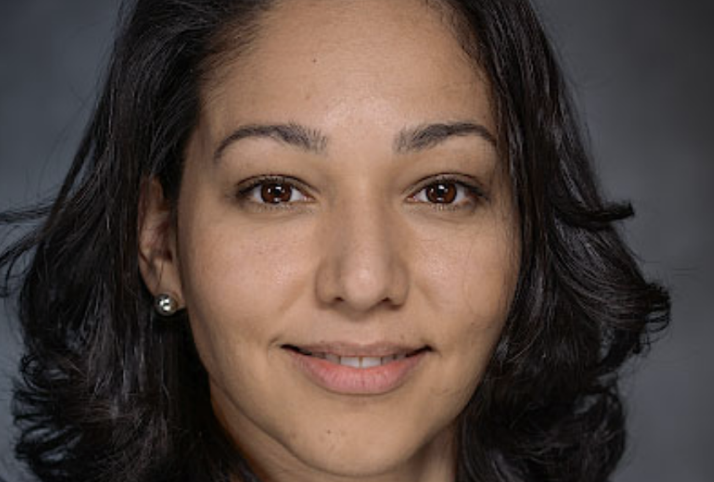
As for the final ‘go’ from the administration, Assistant Head of School, Academics Michal Hershkovitz outlined what Poly seeks in new classes. Hershkovitz said, “we only teach courses our faculty can teach successfully and from a strong base of knowledge,” as seen by the faculty’s commitment in creating a generally thought-out outline of the course before it’s accepted, and the syllabi that are made meticulously once the course is active. Another component the administration looks for in classes is how “necessary [it is] in our curricula based on trends or requirements of the discipline,” Hershkovitz elaborated. Not only is a topic’s connection to current events and trends of interest something the administration needs from classes, but it’s something that encourages the teachers to want to teach them and the students to want to engage.
Dillon expanded on her reason for bringing back “International Relations” by explaining that “it feels like a lot of students have questions about [international systems and] our international news is so present, even in our lives now.” Hershkovitz and Dillon’s points of topicality and trend are evidently an important aspect of classes that need to be incorporated into students’ education. Angelique Lopez ’26, a student currently taking “Satire and Society,” reflected on her studies so far in Marcus’s class. “I like how the discussions connect artworks to real-world issues and experiences, which makes the class feel more relevant.” Lopez’s acknowledgement that she’s been more engaged in Marcus’s new class because of its relevance, is also a topic that scholars have found to be the most beneficial strategy in education.
The Cambridge University English blog’s article “What’s it got to do with me? The role of relevance in learner engagement,” refers to a quote by Judy Willis, “students need a personal connection to the material… Without that, students may not only disengage and quickly forget, but they may also lose the motivation to try.”
So, what are students learning in these classes anyway?
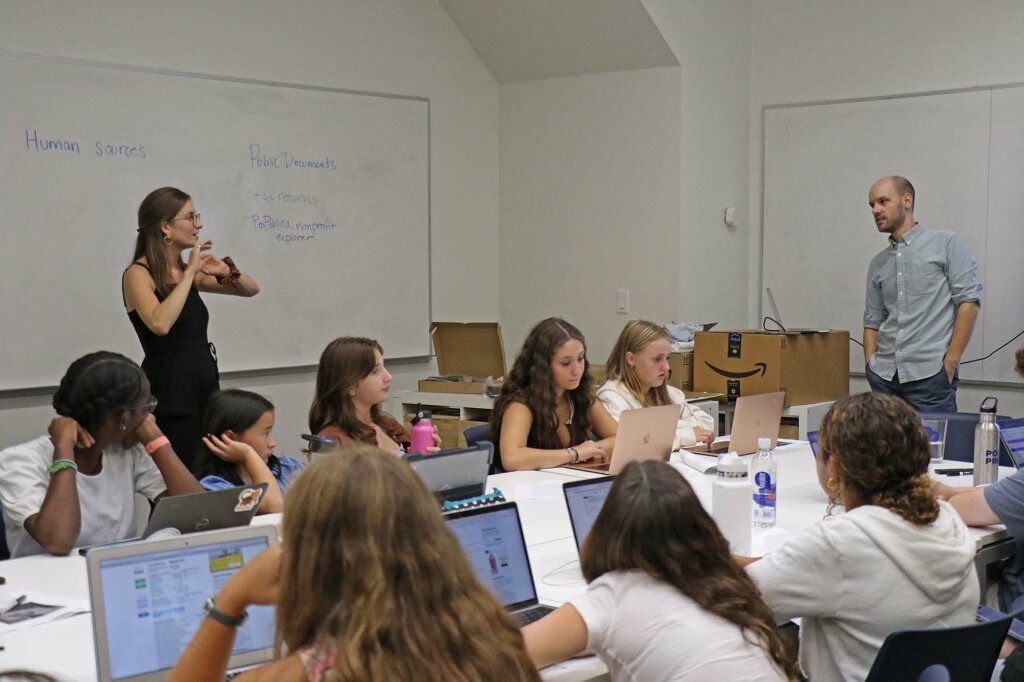
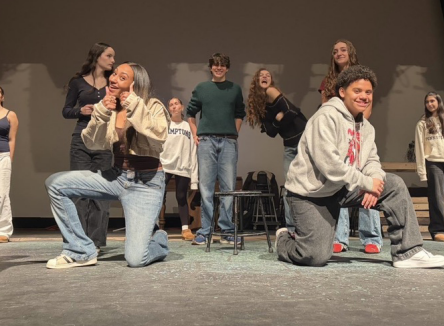
“Satire and Society” was proposed by Marcus in the Spring of 2023, and taught the first semester of it in September 2023. In this class, students are asked to write multiple analyses of literature and film, conduct a lesson based on a satirical piece and finally create their own satirical work. Put simply, the course’s syllabus describes the class’s purpose to “explore the long tradition of literature dedicated to exposing folly, hypocrisy, and injustice.” But Marcus added that he also hopes the students leave this course with the skills to “[look] at artistic expression differently, [and understand] the stakes and of literary works that are satirical.”
Poly’s “International Relations” has been brought in and out of the school for a while, with multiple different teachers. As Dillon said, it was taught by her from 2015-2017, and before that Elijah Sivin, Director of Service Learning and even Sarah Bates, Head of Upper School. The course is split into five sections, each corresponding with a month. September focuses on theories of international relations, October on war, November on international political economy, December on transnational politics and January brings it all together with a final project. The course description states that at the end of every unit, students write an essay and “‘test’ them out on a current event of your choosing.” The “International Relations” course at Poly is formatted to “understand and make sense of the relationships of organizations, countries, and individuals,” according to the course description.
Dillon finds this course particularly unique because although it’s categorized as a history elective, she makes it clear that it is not a history class. “The idea is to try to explain and even predict what will happen in the world based upon an understanding of the international system and the actors within it. And that’s not history, right?” Dillon elaborated, “[History is] trying to sort of explain and understand, but coming from a really different position, not trying to predict.” Along with understanding specific international relationships, Dillon hopes that at this time of polarization, this class can guide students to “look at how others are justifying and reasoning, and notice what’s interesting and important in their reasoning and thinking and appreciate it without having to accept it.”
These new and seemingly niche classes seek to connect relevant topics of students’ lives to their foundation of education. In the coming years, even more classes will be open for registration, and even more students will be able to find the meaning of their education in the world around them. Now, teachers look forward to bringing students’ ideas for new courses to engage them in new, unique and diverse topics.