
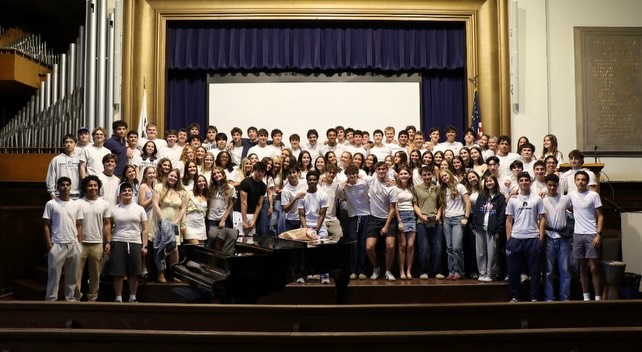
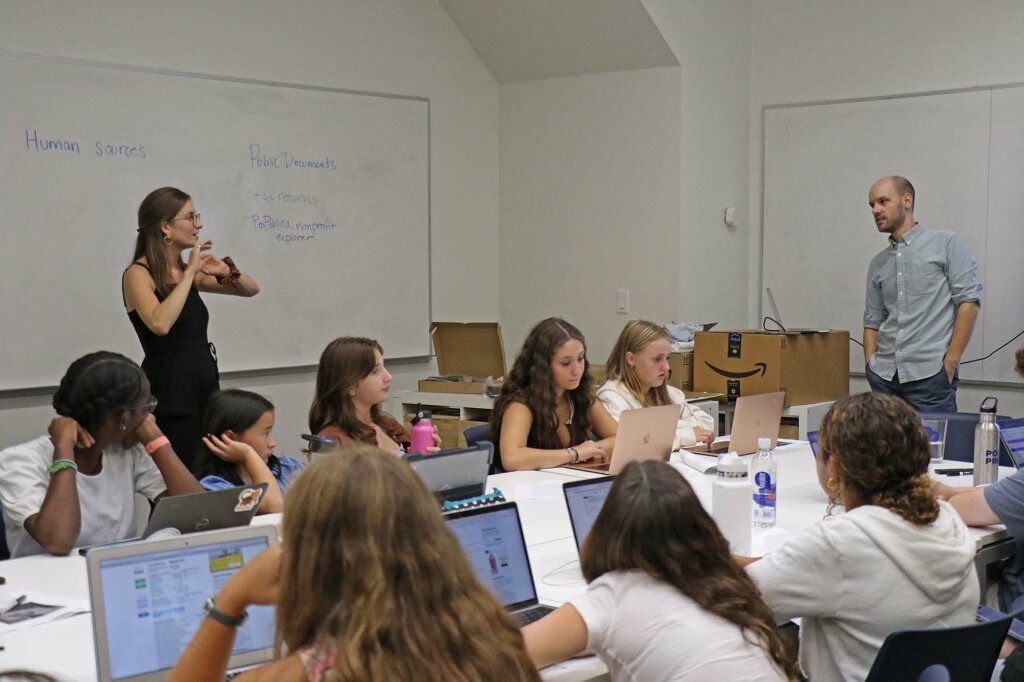







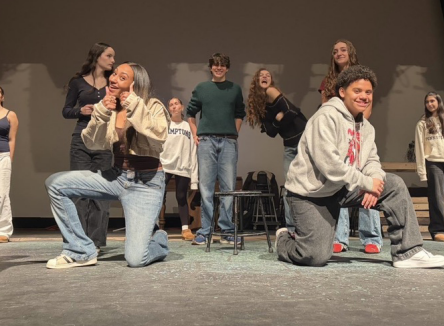






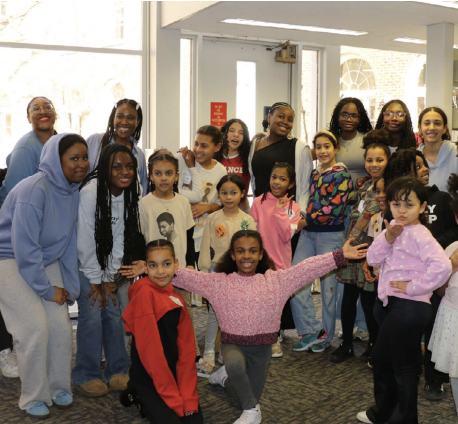
For years, many Black girls at Poly wished for a place where they could see themselves reflected; a space where visibility, community and belonging were not afterthoughts but the foundation. That longing for connection eventually sparked an initiative that has reshaped what support looks like on campus. S.I.S.T.E.R.S. grew out of that need and created the kind of community students had once only hoped for.
S.I.S.T.E.R.S. stands for “Sisters Inspiring Success Through Encouragement, Resilience and Support.” The program was first imagined in 2023 as a Service Learning Team (SLT) project led by Rani Green ’25, whose research centered on the experiences of Black girls in predominantly white institutions. Through surveys, reflection and student-led analysis, her group identified a gap in support systems that many Black students had experienced but had never been formally addressed. Their findings were presented during a professional development session the following spring, where faculty and administrators saw the depth and urgency of what students were experiencing. Out of that work grew a cross-divisional community that now brings together Lower, Middle and Upper School students. The goal is simple yet transformative: to create an environment where younger girls enter Poly knowing they have older peers looking out for them, and where older students can lead with intention, mentorship, and pride in their identities. What began as a proposal is now a thriving sisterhood that continues to grow each year.
For Tunmise Rasaq ’27, one of the Upper School leaders and co-founders of S.I.S.T.E.R.S., the heart of the program lies in making each member feel heard. From the beginning, she and her peers wanted to confront a reality that had gone unaddressed for years: the “very small population of Black girls in the Lower School.” Without a substantial amount of older peers who looked like them or shared their experiences, younger students often moved through Poly without the affirmation that comes from seeing oneself reflected in other grades. S.I.S.T.E.R.S. was designed to fill that void. Rasaq said that the co-founders want the girls to “feel a sort of community with the middle school and high school girls, and have someone to look up to,” a support system that would meet students long before they reached the Upper School. She remembers the moment she realized the program was working. After only a few sessions, “the middle schoolers felt more comfortable coming up to us,” she said. What followed was deeper and far more meaningful than simple familiarity: there was “that sort of friendship bonding,” she recalled, and the younger girls soon began to “confide in us whenever something happened.” Their trust came from the sense that the older students had “more experience” and could help them navigate moments in and out of the classroom. It was a sign that the group had begun to create a true sense of sisterhood through shared identities.
But for Rasaq, the vision for S.I.S.T.E.R.S. extends far beyond weekly gatherings and one-on-one conversations. What began as a simple SLT has since grown into a mentorship program, expanding its reach and purpose as students shape it into the supportive community it is today. She imagines the program evolving into a sustained, intergenerational pipeline of support, hopefully bringing in alumni as well. “We want to help with professional enhancement, career development. We want to be a really long-term thing with all people,” she explained. Rasaq hopes that years from now, members will still feel comfortable reaching out to one another — “whether professional, academic, or just purely for a friend.” In her mind, the group should function as a lifelong network, not just a high school affinity group.
Chioma Stanley ’27, another co-founder, understands the purpose of S.I.S.T.E.R.S through the lens of her own experience navigating Poly. When she helped build the group during its earliest stages, she saw it as a chance to provide what she and so many of her peers had longed for. When she first arrived at Poly, Stanley recalls being “one of few Black girls here,” and hearing from friends who said they had been one of “the only Black girls in their entire class or even grade.” She believes that the earliest years of school play a defining role in shaping confidence, identity, and a sense of belonging. Stanley stated, “I feel it’s harder to come to terms with being one of the sole Black girls in a space when you’re younger.” At that age, “you’re learning all these social skills and learning how you’re fitting in,” and the absence of peers who look like you can leave a lasting mark. Stanley articulated how powerful it is to encounter representation early on because “if there are people that are like you, it can really make sure you feel included and seen.” This belief is at the core of S.I.S.T.E.R.S: cultivating belonging before students ever feel the weight of being the only one within their identity.
The group’s cross-divisional structure comes with challenges, particularly in designing programming for multiple age groups. “The engagement levels with a fourth grader isn’t the same as a junior,” Stanley said. This gap is one of the group’s biggest logistical hurdles, along with balancing time since “the group is almost all juniors.” But Stanley sees the emotional impact as the most accurate measure of success. She described the reassurance that comes from “knowing there’s people there that care for me and want me to feel seen in my experiences,” and emphasized how this sentiment is shared among the co-founders: the feeling of “being included and having that space where you can really just be yourself.” She hopes that the next generation of members carries that mission forward with the same devotion. “When we graduate, we hope there will be people who still care for the program the same way we do,” she stated. She believes that the younger girls will “continue to be just as creative and find new ways to make Poly inclusive.”
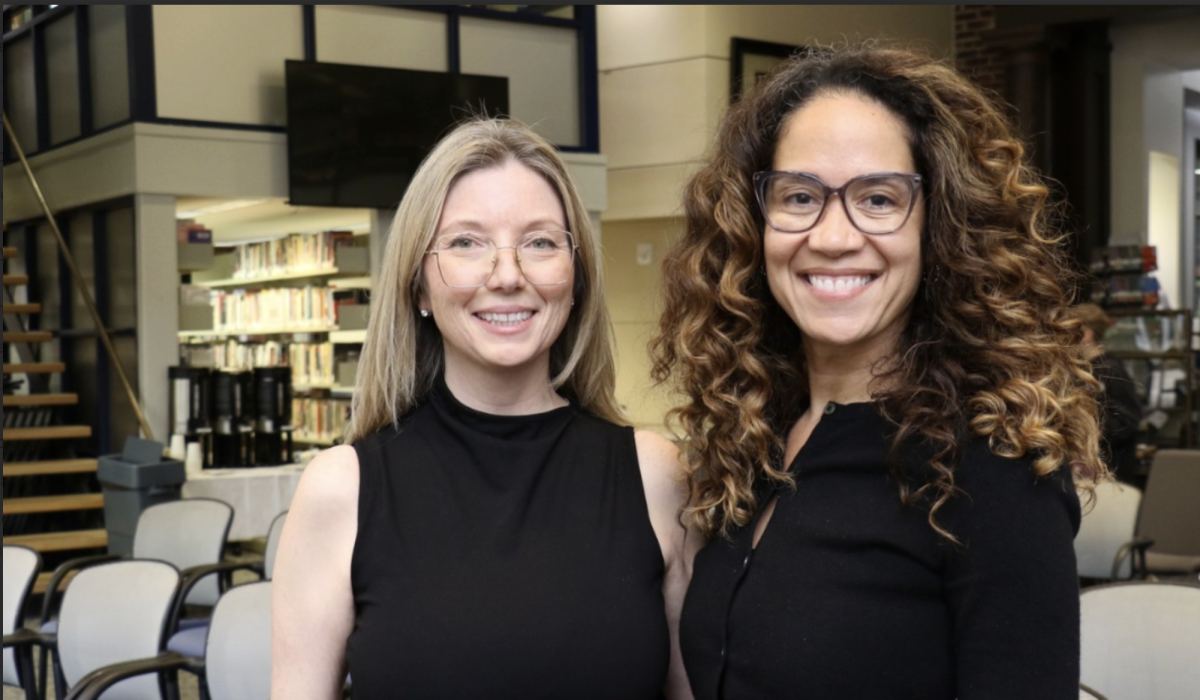
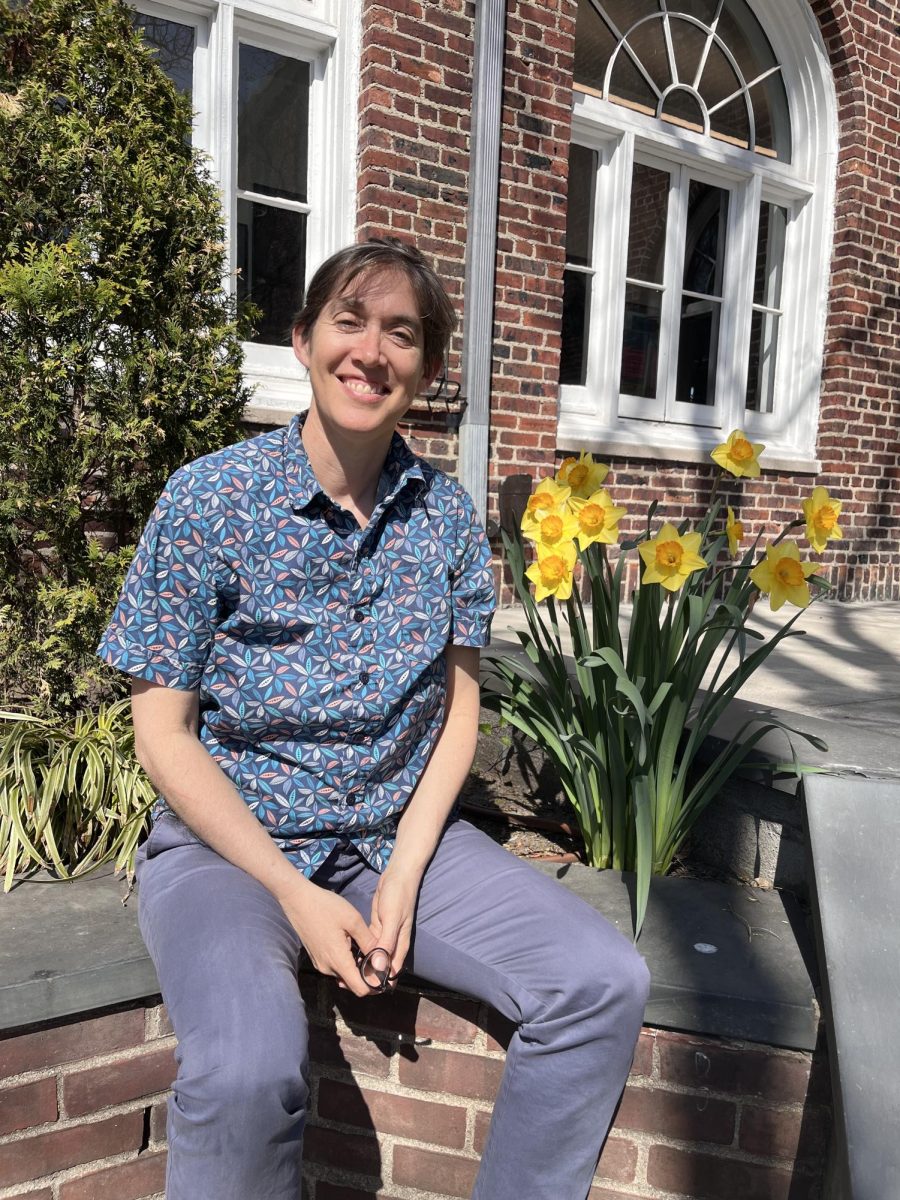
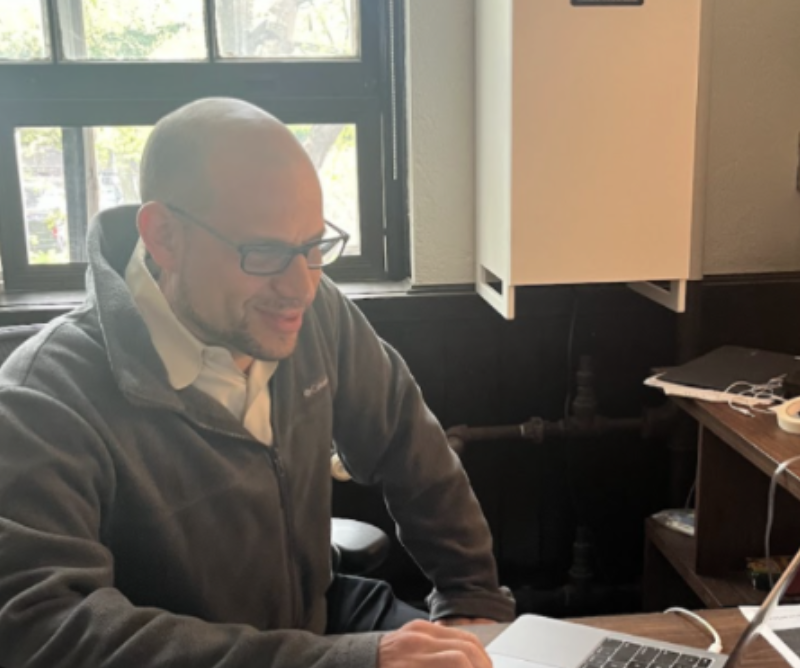
Serving as the faculty advisor for S.I.S.T.E.R.S., Computer Science Faculty and Director of Robotics Kristin Guynn has watched the affinity group grow into the kind of support system she wished for in her own school years. Growing up in a school “similar to Poly,” she remembers being the “only Black girl until high school,” and later graduating with a class of “two Black girls.” Those experiences shaped how she understands the importance of belonging, as she said, “a lot of things that happen in high school inform how you view yourself.” When Green first brought the idea to her through an SLT project, she immediately recognized its potential. The founders were committed to creating a space that connected Black girls across grades and also pushed the school toward stronger representation. For Guynn, the group’s structure is what makes it powerful. She watched a connection grow through small, meaningful moments in the affinity group: teaching younger girls to braid hair, playing games in the park, or simply walking the halls together. She believes “that makes a huge difference” because this companionship sparks confidence, knowing you have someone who shares your identity and experience.
As the group expanded, Ms. Guynn’s most important role has been supporting the students who helped build it. She describes her role as helping the co-founders turn their ideas into something lasting, explaining that “they have all these great ideas,” and her job has been to guide them in shaping “a sustainable organization” that future leaders can build upon. She calls the leaders “pioneer members” who did the “heavy lifting and legwork” to create a space that usually doesn’t exist. What excites her is how the co-founders think beyond themselves. They want S.I.S.T.E.R.S. to be shared with other schools and to strengthen the larger Poly community. As she put it, “when you do better for other groups, the whole community thrives.”
As S.I.S.T.E.R.S. prepares for its next meet-up, the leaders are focused on making the meeting truly reflect the voices of the girls who participate. Past S.I.S.T.E.R.S. events have functioned like orientation-style gatherings, where new members meet the group, and leaders work to bring in more students by hosting fun, community-building activities across campus. Rasaq acknowledges that they want to “look for more input people want to see in the program rather than just us,” hoping to create something “everyone looks forward to.” The group also views the gathering as a space to open conversations that many students hesitate to have in traditional classrooms. Stanley hopes to “destigmatize conversations about race in identity” and turn them into a “learning experience for everyone.”
The upcoming S.I.S.T.E.R.S. events represent the next step in expanding the group’s cross-divisional community. Rasaq hopes it becomes a gathering that reflects “what others want to see in the program,” while Stanley sees it as another chance for the younger girls to feel “recognized and understood.” At the same time, Ms. Guynn views it as an opportunity to continue weaving together the relationships that sustain the program. Across all the leaders, the goal is consistent: to build a legacy of visibility, representation and care. S.I.S.T.E.R.S began as a response to a need, but it has grown into a community that will expand beyond itself, amplify with every new member, and ensure that no Black girls at Poly ever have to navigate difficulty alone.