



















When a classic returns to the big screen, audiences tend to fall into two categories: the devoted readers who are eager to see how faithfully the story’s been adapted and the curious newcomers drawn in by the film’s star power. The recent release of “Wuthering Heights” on February 13 has sparked this exact divide at Poly Prep, where students are sharing their opinions on whether the new film captures the intensity of Emily Brontë’s early-Victorian novel.
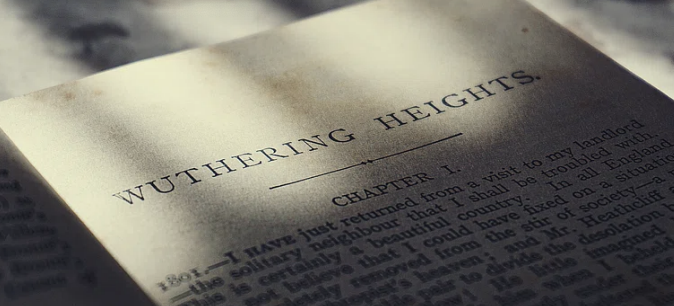
Published in 1847, “Wuthering Heights” has held a reputation as one of the most emotional romances in English literature; its tale of obsessive love between Catherine Earnshaw and Heathcliff has made the novel both a staple and a source of debate for generations of readers. With the film’s Valentine’s Day release, the story has reentered the cultural conversation, boosted in part by the high-profile casting of Jacob Elordi as Heathcliff and Margot Robbie as Catherine.
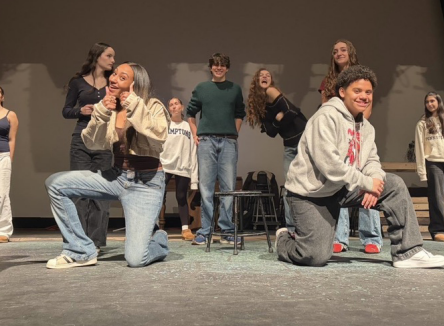
At Poly, reactions to the adaptation vary widely depending on familiarity with the source material. Maggie Cochran ’26 did not read the novel but went to see the movie. She said that “as someone going into acting, I was extremely impressed with the acting in the film.” Cochran added that, “it was an amazing movie that left me in tears with beautiful cinematography” also noting the “ beautiful costumes and hair styling…if you pay attention to the little details in the movie, it’s a phenomenal film.”
On the other hand, some students were displeased with the execution of the movie. Max Ruggie ’27, who had originally read the novel, compared it to the movie, saying that “it doesn’t even feel like the same story.” Ruggie also said that “a lot of the gothic aspects were missing in the movie,” noting that there are significant differences in the way the characters looked in the movie compared to the book. Heathcliff’s race in the novel was not white, according to Ruggie, who says “the racial aspects were altered.” Additionally, Ruggie stated that “they didn’t even have all the characters who were in the book.” Overall, he said that “a good chunk of the book was just taken out in the movie.”
This split reflects a broader trend that literary adaptations increasingly rely on celebrity casting to attract younger audiences who may not have any prior familiarity with the text. In this case, the pairing of Elordi, known for his screen presences in “Euphoria” and “Saltburn”, and Robbie, known for her performance in “Barbie” and “The Wolf of Wall Street,” has generated significant online discussion on social media. Some fans praise the casting as a fresh reimagining, while others question whether the actors match the raw, gothic energy of Bronte’s characters.
Moreover, in an era dominated by streaming and short-form content, some people who primarily consume modern-day media might view the release of a 19-century novel adaptation as unusual. However, when paired with compelling visuals and recognizable actors, familiar stories can still draw young audiences into theaters. At the same time, the film has reignited conversations about what audiences expect from literary adaptations. Should a modern “Wuthering Heights” remain strictly faithful to Brontë’s text, or is reinterpretation part of keeping classics alive? Among viewers, opinions span over a spectrum. Some argue that modernization is necessary to keep the story content relevant, while others believe the novel’s power comes solely from its historical and stylistic origin.
Ultimately, the new “Wuthering Heights”is doing what many adaptations often do, which is to provoke discussion. Whether students and critics approached the film as devoted readers or fans of its high-profile movie stars, the result has been the same: a renewed interest in a novel that continues to draw in an audience nearly two centuries after its publication.