










Hearst Tower, where I would soon enter and meet my journalism class, stretched above me like a great pillar. Inside it lies a treasure trove of journalistic history and the diligent innovators who were, at that exact moment, shaping modern media.
The building, which stands at 600 feet tall in Midtown Manhattan, is the global headquarters for Hearst Communications, a multinational and highly influential private media and business conglomerate who has ownership over more than 200 magazines, including Esquire, Harper’s Bazaar, Town and Country and Elle; 80 newspapers, including the Houston Chronicle and San Francisco Chronicle; 35 television stations including ESPN and Lifetime; and more, according to the Hearst website.
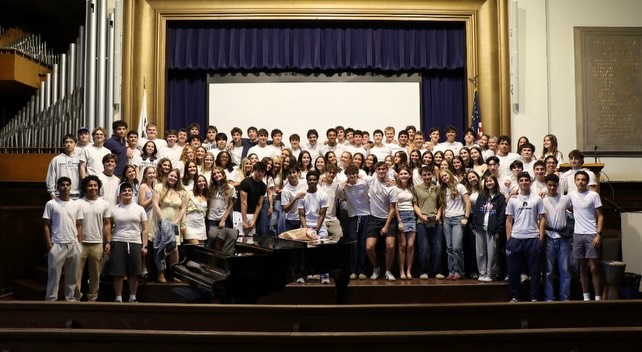
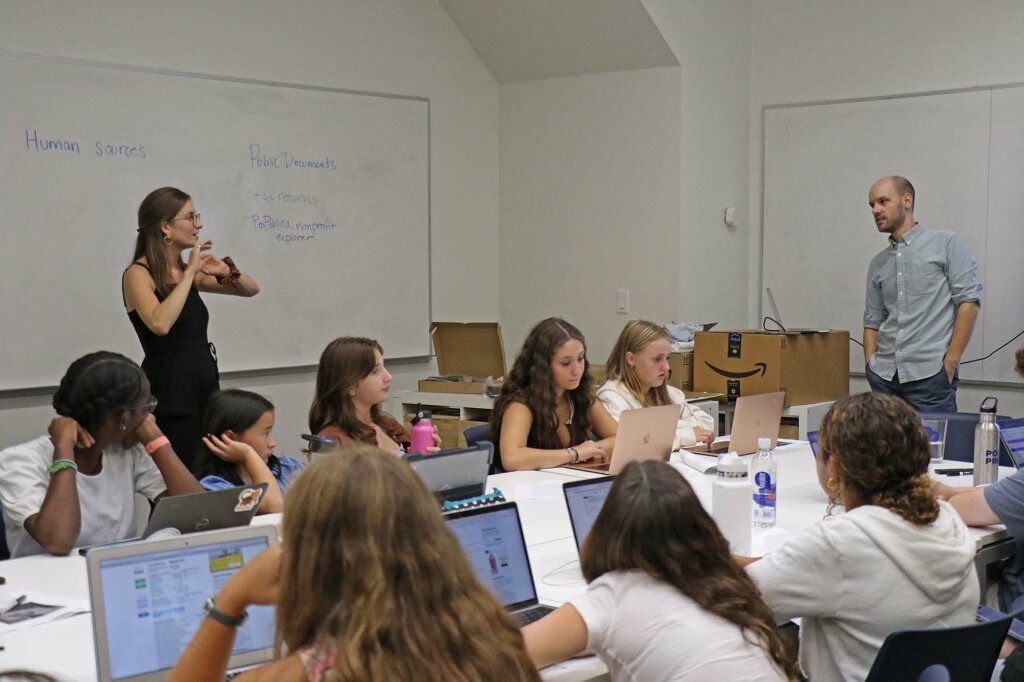
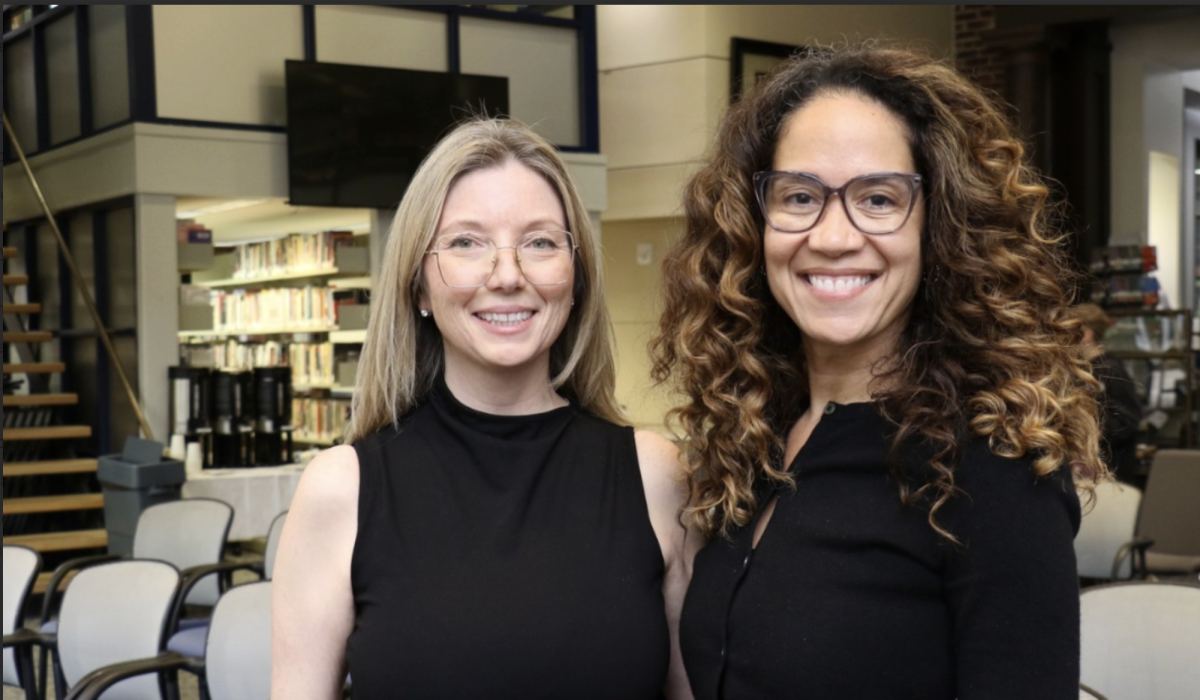
This field trip was possible since Erin Hughes, Poly Prep’s Associate Director of Major Gifts, met Alicianne Rand, the Senior Vice President and General Manager of the Fashion and Luxury Group at Hearst Magazines and mother to a Lower Poly student. Hughes then connected Rand with Rachael Allen, Poly Journalism and Media Studies Faculty. After being put in touch, Allen asked if her advanced and standard journalism students, which together are made up of the editors and majority of writers of The Polygon, could visit the Tower. Rand was open to this request and fashioned the field trip and its itinerary alongside her assistant, which was scheduled for March 18.
Allen was inclined to organize this field trip due to the importance she saw in getting “real world work experience,” as she put it. “I think being able to see a working newsroom, especially what that looks like today, is very important,” she said. Allen continued, “Journalism is not necessarily… everyone over their computers typing — instead it actually looks really different today. It can encompass social media, photography, as well as traditional writing. And so I think any opportunity for [my students] to see what careers could look like and to be exposed to journalism in the real world is useful.”
Furthermore, “[exploring magazine work] opens up your sense of what journalism can be; that it doesn’t only have to be the traditional, straightforward news story that follows the inverted pyramid… I think that seeing a magazine, which offers more flexibility in terms of style of writing and [visuals] and all that opens up the world of media,” Allen said.
“The whole time we were [at the tower], I kept thinking of the movie ‘The Devil Wears Prada,’” Rose Filippazzo ’27, Polygon Breaking News Editor, recalled. The movie, which tells the story of aspiring journalist Andrea Sachs who lands a job at a high fashion magazine, eerily mirrored our present. Just as Andrea is depicted in the movie, we walked through the halls crowded with working journalists and editors with looks of pure awe pasted across all of our faces.
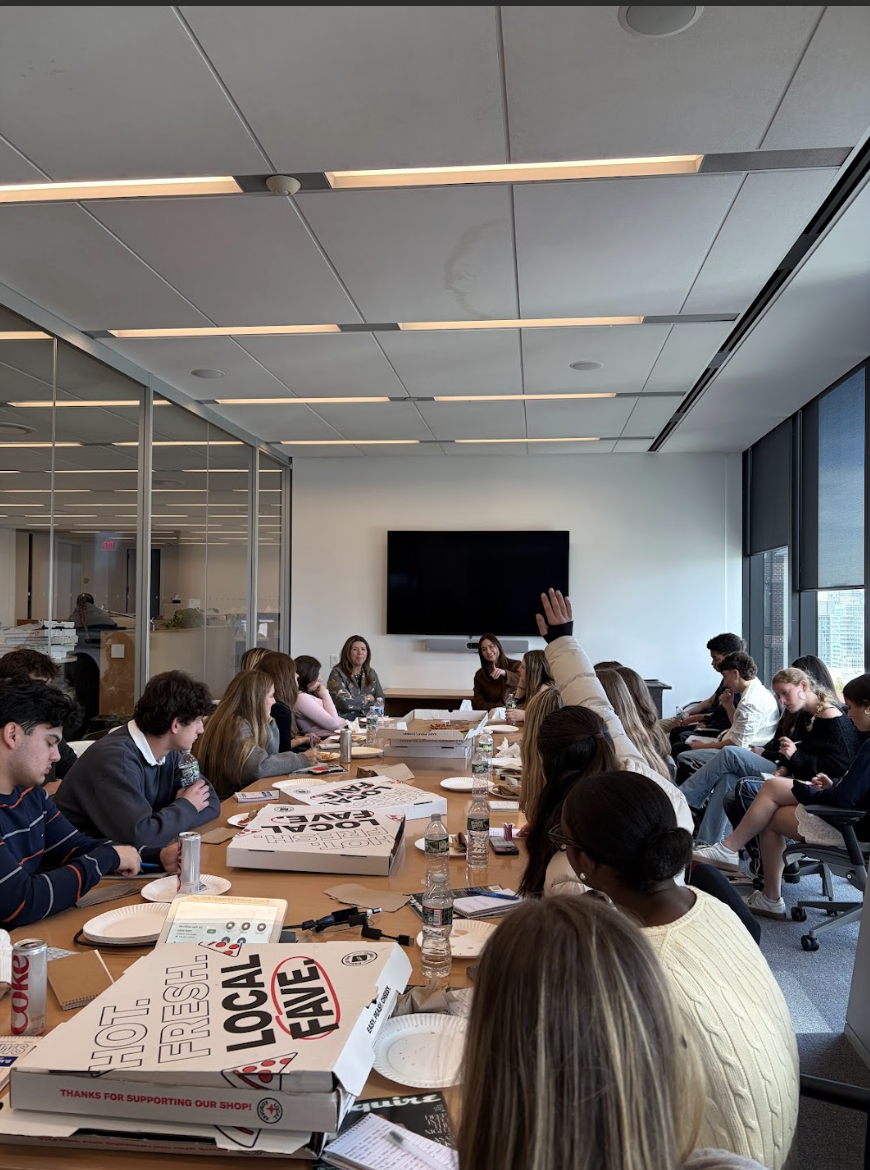
Upon arrival, we entered a large room, where we would spend the beginning of our day. We then took our seats in the make-shift audience style seating and panel that had been prepared for us.
Rand was the first to officially speak to us. She “is responsible for developing and overseeing brand-level consumer strategies,” according to the Hearst website. She taught us that every magazine has a specific audience they are catering towards, of which must be monopolized and cultivated to create profit.
“[Rand] really emphasized the importance of having a cohesive aesthetic throughout,” Filippazzo said. “I learned there should always be some kind of theme and cohesion,” which must be constantly upheld to maintain one’s audience.
After Rand, Alix Campbell, Vice President of Visuals and mother of Poly alumna Zoë Campbell ’25, entered alongside Sabrina Toto, Visual Production Coordinator. They are responsible for “overseeing the photography and visual direction across [Hearst’s] magazines [and] producing shoots for both print and digital,” as stated by the Hearst Website.
Toto and Campbell explained the process of shooting and choosing photos, emphasizing that every photo should portray some kind of narrative or reveal something new about its subject(s). “I think [Hearst’s] use of photos and intention behind the photos they use is very interesting,” Eliana Friedman ’27, Managing Editor of The Polygon explained. “We should definitely implement [Hearst’s use of photos] into The Polygon, because it adds to our stories and the overall aesthetic of the paper.”
Additionally, “Sabrina Toto stuck out to me because she was very young. She was fresh out of college yet she had this big, prestigious job,” Filippazzo stated. “She was inspiring to see—like, that could be me in four years.”
Next, Mia Lardiere, Senior Director of Audience Development through Social and Video, and Samuel Maude, Content Strategy Manager, spoke to us. They discussed being tasked with helping magazines translate their work onto social media. They create and use each brand’s unique social and video strategy to produce videos that cater to each magazine’s brand-identity and audience.
“Hearing that people who work at such a big magazine are transitioning a lot of their work over to social media and online platforms should tell us, as The Polygon, that we need to begin the same process,” Joshua Lippert ’28, Polygon Arts Staff Writer stated. “This taught me that [The Polygon] should try to make our articles and information more accessible online, whether that’s through the website or social platforms, like Instagram,” in order to adapt to the changing media landscape.
We were then led into the Esquire Fashion closet to meet Alfonso Fernandez Navas, Senior Style & Market Editor, and Andrea Rios, Fashion Assistant, who are responsible for working with photographers and stylists to select the wardrobe for shoots seen in the magazine. Surrounded by racks of never-worn couture pieces and unreleased luxury skincare products, the two explained that they are responsible for being very well versed in current fashion trends and must predict and single-handedly shape future trends.
“At a time where social media dictates so much about what we wear and what is trending, it’s interesting to learn [stylists] are the ones that set and predict trends before they even happen,” Filippazzo explained. “I always thought influencers were the trend-setters. I never thought of [trends] in the way they explained, and how they trickle down from the top [being high-fashion magazines], down to everybody else. It kind-of shattered my current understanding of how trends work.”
Throughout each guest speaker’s talks, we were constantly reminded to work hard, be kind, and, most importantly, network.
“Many of the speakers talked about taking advantage of one’s connections… They emphasized making sure you’re using your connections to help build yourself a pathway, which is advice you can use in other fields, as well as journalism,” Lippert explained.
As the final portion of our day, we were led into a small conference room to enjoy pizza and to hear from Stellene Volandes, longstanding Editor-in-Chief of Town & Country and Editorial Director of Elle Decor who graduated Poly in the class of ’89.
As Volandes spoke, she emphasized the importance of being fearless and asking the questions everyone else is afraid to in order to succeed as a journalist. She highlighted that the best find the strength to overcome their fear and self-doubt and chase the stories no one else is willing to. Allen noted that the majority of students’ reflections on the trip “circled back” to this advice, many stating that it stuck with them.
As I listened to Volandes speak, I was overwhelmed with the impression that she and all the other guest speakers we learned from genuinely cared about helping my classmates and I. With every question Volandes answered with enthusiasm and care, I became aware that she truly wanted to guide us to the best of her abilities.
Leaving, through the same doors I had earlier looked at with amazement, I was reminded that just a few hours before the world of media and its inhabitants felt so awe-inspiring and unreachable. While they still remained awe-inspiring, this field trip allowed me to feel slightly more connected to the field of journalism and those within it.
When recalling this experience, I’m reminded that the world of media is not as distant as it might seem. Behind every magazine and newspaper, there were once students just like me, working to build their futures, who now are more than willing to help me and other aspiring journalists succeed.