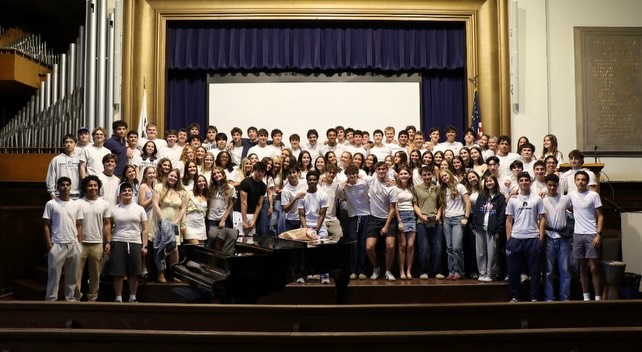
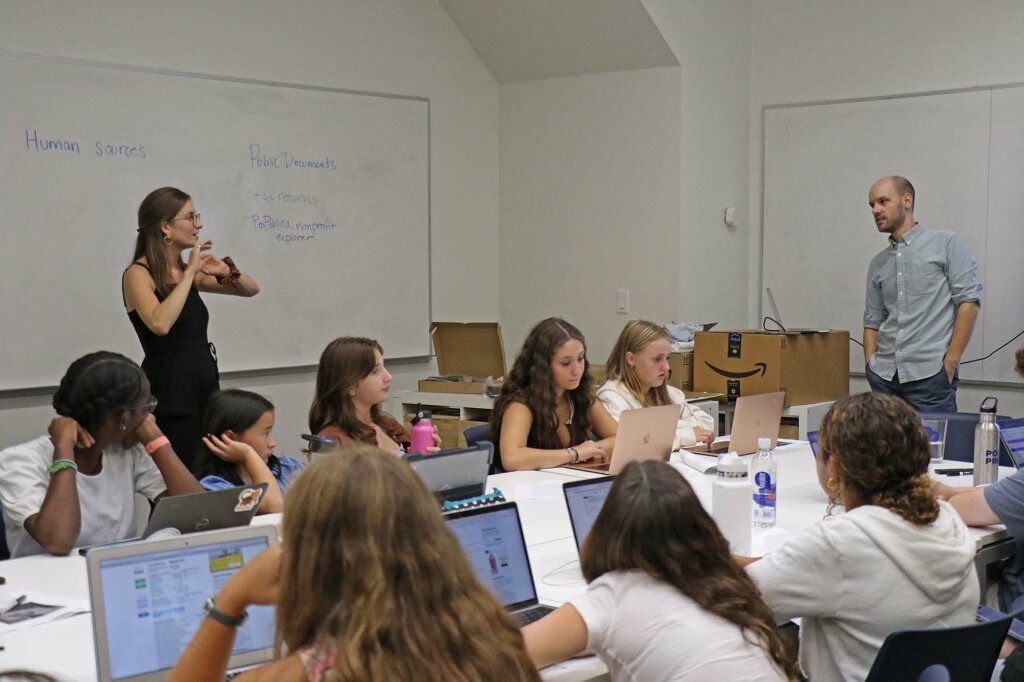

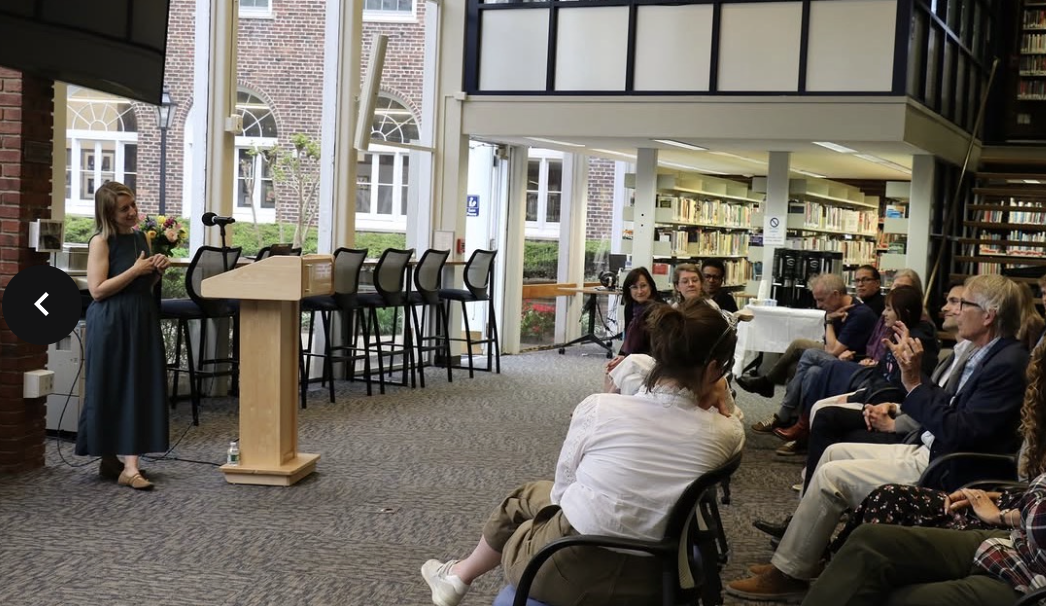








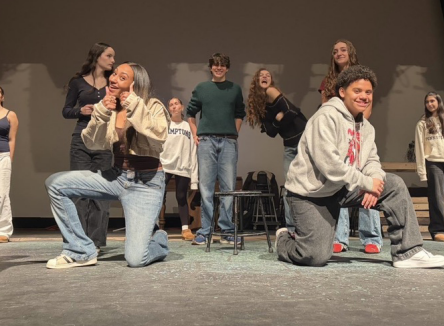






With New York City’s mayoral election approaching, this year’s civic engagement efforts with the election stand apart from the ways Poly Prep has responded to political events in past years for one key reason: they’re almost entirely student-led. On October 29, the Student Service Board’s Civic Engagement Committee hosted a history talk exploring the mayor’s role, how city government works and how this year’s race affects everyday life. The discussion has inspired ongoing conversations across campus about civic engagement and leadership.
“The initiative really came from them,” said Elijah Sivin, Director of Service Learning and history faculty member. “It’s one of several projects the Student Service Board has taken on this year, but this one is unique because students are shaping the programming and deciding how to reach their peers.”
This history talk was led by Brandon Willabus ’27, Lulu Adefris-Yaxley ’26 and Sasha Londoner ’27, who spent weeks researching how the role of New York City’s mayor operates and interacts with other branches of local government. “We looked at how the mayor collaborates with the city council,” explained Willabus. “You can think of the mayor as the city’s chief executive, and the city council as a congressional body.”
They also examined the legacies of past mayors, comparing their leadership styles and policy priorities to those of today’s candidates. “We [also] look[ed] at the background of their main platforms and how their policies fit within the past interpretations of the mayor’s role,” Willabus added.
Virginia Dillon, History Department Chair and the organizer of Poly’s history talks, said the event aimed to give students both civic and historical context for the upcoming election. “We’re mostly being guided by the students,” Dillon said. “We’re trying to help them see not just the individual candidates, but the larger context of why mayors matter so much to New York City.”
Dillon added that linking the election to students’ daily lives makes the conversation especially relevant. “So many issues New Yorkers care about, [such as] affordability, safety, public services, are decided at city level,” she said.
For Sivin, the project marked a shift in how Poly engages with politics. “We tend to focus more on national elections,” he said. “But municipal elections, like this one, are just as important. The ballot includes the mayor, city council, comptroller, public advocate, and some local judges. It’s a fascinating election because each candidate represents a different version of what a mayor should do.”
Dillon agreed, emphasizing that civic engagement shouldn’t stop at presidential elections. “Everyone pays attention when there’s a president on the ballot,” she said. “But local and midterm elections are just as crucial. Staying informed and voting when you can makes a real difference.”
Willabus, who co-leads the Civic Engagement Committee with Adefris-Yaxley, said the purpose of the event was to make civic learning interactive and accessible. “We wanted to give students a foundation for engaging with local governance,” he explained. “It’s powerful that we’re able to share our own perspectives and meaningfully connect with these issues.”
After the talk, the committee followed up with resources for students, including links to ballot proposals and voter registration information, encouraging continued learning and discussion. They also directed students to the candidates’ campaign websites, The Polygon and local news publications, such as City and State NY and The City, to learn more about the candidates and the discussion surrounding them. On November 10, they hosted a follow-up talk discussing the results of the election and what that means for our city.
“Civic engagement starts young,” said Willabus. “Your civic duty isn’t just to vote. Your civic duty is to be knowledgeable and active.”