


















For many Poly Prep students, the arrival of summer means something more than rest or beach trips. It marks a return to the place that shaped their earliest friendships and memories: sleepaway camp. While camp is often seen as something reserved for younger children, countless Poly students still hold their experiences at camp close to their hearts and return as leaders. Still, some students grow out of camp as they get older, while others never attend at all, creating a wide range of perspectives on sleepaway camp within the Poly community. Many students describe camp as a space where they can grow, reconnect and rediscover themselves, away from school and home. For some, it’s the independence that comes from living without parents for the first time. For others, it’s the friendships and traditions that make each summer feel like a new chapter in a lifelong story. Even students who have outgrown camp, or never even attended, say the idea of it—learning, bonding and finding freedom in a different setting—still resonates with them. Masoume Khonsari ’27 notes that she can see how “traditions, activities and new experiences can bring people together,” creating a transformative community even if it was something she never ended up participating in. Teachers, too, see how these experiences build confidence and perspective that last long after the campfires burn out.
For Talia Barro-Parsoff ’26, camp has been a constant in her life and has become a second home. She explained that she has “been going to camp for ten years now.” Over time, Barro-Parsoff’s role at camp shifted from being a participant to a leader. As a counselor, she gained a deeper understanding of what made camp so special and how it continued to shape her years later. She said that, “becoming a counselor made me appreciate it even more.” Barro-Parsoff explained that, “at first it felt strange not being a camper anymore,” but eventually being a camp counselor felt worth it because “I became part of someone else’s camp experience in a new way.” She explained the experience taught her true leadership, and it reminded her of how meaningful it is to help create the same joy that once shaped her own summers.
For Genevieve Ames ’27, camp was once the highlight of summer, filled with late-night talks, campfire songs and the thrill of being away from home. But as the years passed, Ames began to feel herself growing out of that world. Ames remembers the excitement of her first summers at camp and how much she loved the sense of community, but gradually, her priorities began to shift. “I went for a few years and really liked it at first,” she said, “but eventually I wanted to try different things.” She expressed her desire to travel more and spend time with her friends at home. Her summers started to feel more open-ended, and she began to enjoy the freedom of making her own plans: swimming, volunteering or exploring new places. Although she no longer spends her summers at camp, Ames still looks back on the experiences fondly, “it helped me figure out what kind of environment I like being in,” stated Ames. Camp is “great for people who love that close community feeling, but it just stopped being the right fit for me after a while,” shared Ames.
Unlike many of her peers, Khonsari has never gone to sleepaway camp, and she never really wanted to. “I’ve just never really been interested in it,” she said, “my parents never went when they were little, so it wasn’t something that was part of our lives.” Khonsari explained that the idea of staying in one place for weeks surrounded by the same group of people feels limiting to her. Instead of spending summers at camp, Khonsari’s summers are often filled with travel and exploration. She loves the constant movement and change to experience new cultures firsthand, something she feels camp could never offer in the same way. Wandering around new cities, tasting different foods and meeting new people gave her a different sense of independence, which she values deeply. Khonsari sees why others enjoy camp but finds her own version of that same adventure elsewhere. As she put it, “everyone has their own version of freedom; for some people that’s camp, but for me it’s traveling with my family.”
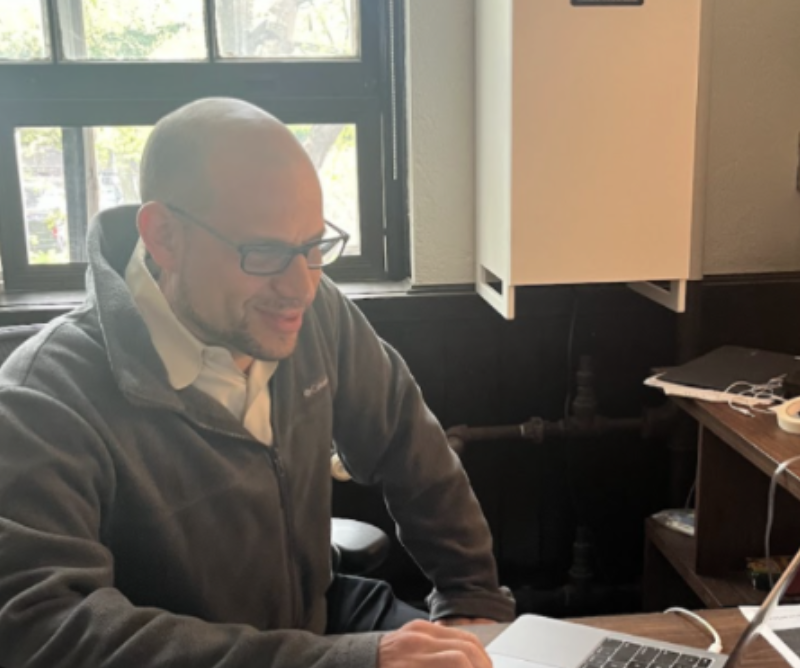
Long before she began teaching at Poly, English Faculty Member Laura Caldwell was a camper herself. Those summers away from home taught her lessons of independence that have stayed with her ever since. Still, she admitted that the first few nights weren’t easy. “I remember being homesick sometimes,” she said, “but once I got used to it, I started to love the feeling of being on my own.” The routine of camp—the letters from home, friends and activities—slowly turned into something she looked forward to.
As a parent, Caldwell has also watched her own children experience that same mix of fear and excitement. She remembers dropping off her daughter at sleepaway camp, she felt proud to be giving her a moment of independence: “I thought I was doing something amazing for her.” Yet before she even made it home, she got a call from her daughter crying, begging to come back home. A few days later, though, her daughter was too busy making friends to call home again. To Caldwell, that story captures what camp is truly about. It begins with nerves and homesickness but ends with growth and confidence. She believes every child should have “at least one experience at camp.” Whether it’s a traditional sleepaway camp or one that’s more geared toward certain interests, camp provides children with opportunities to explore who they are away from their parents.