
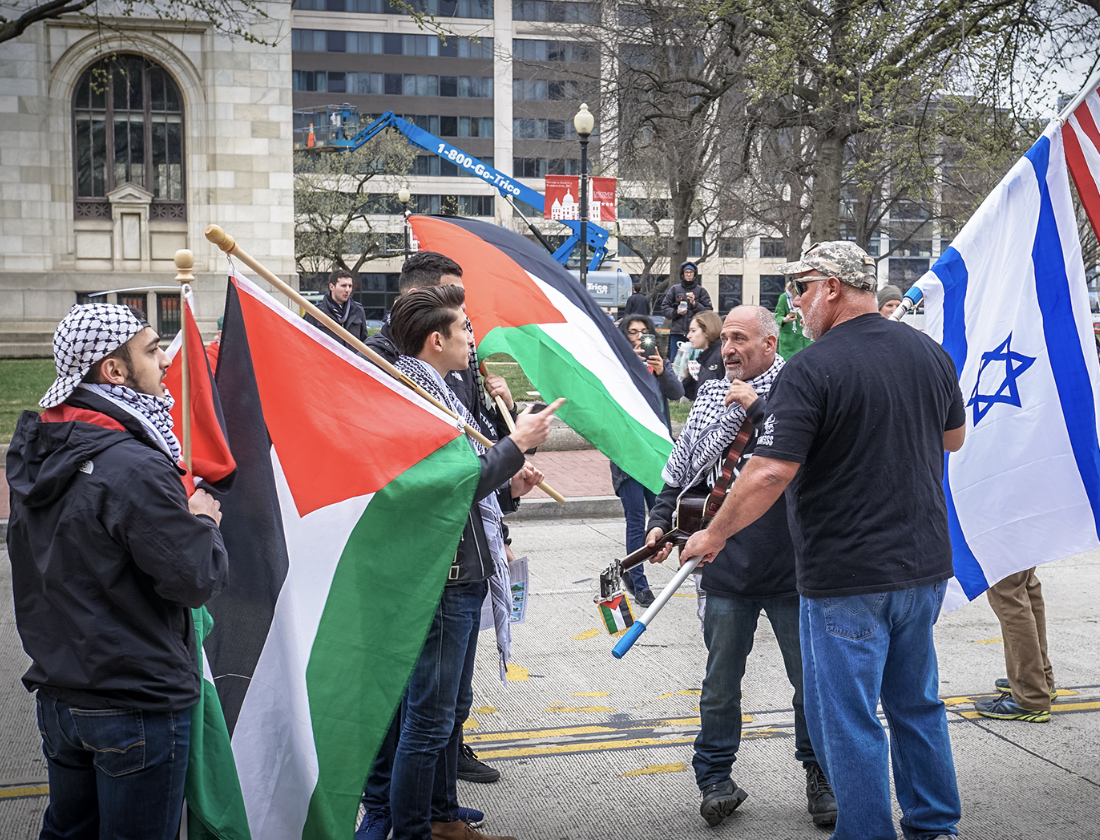








In recent decades, America has faced the crisis of rising political polarization. This phenomena creates more than simple stigma or division; polarization exacerbates ideological extremism between political groups to the point that it creates an environment apt for political violence, according to a study from the Carnegie Endowment for International Peace. As a result, the Pew Research Center reports that “the share of Americans who say having political conversations with those they disagree with is [becoming increasingly] ‘stressful and frustrating,’” and the silence left in conversations’ place is allowing for polarization to continue sewing divides between partisans.
Unfortunately, schools are not exempt from this issue. According to an Education Next report conducted in classrooms across the country, “educators are increasingly experiencing a chilling effect on classroom dialogue,” surrounding political subjects. When conversations do occur, educators often feel as though they’re growing “more and more likely to devolve into name-calling among students,” decreasing the possibility of productive dialogue and compromise.
However, these conversations are nonetheless crucial for preparing students for the world they will enter as adults. According to the National Institutes of Health, political education provides young people with the critical thinking skills necessary to evaluate events, understand the significance of their civic duties and formulate their own opinions of the world, grounded in diverse perspectives rather than a monolithic identity.
To grapple with the era of growing polarization in classrooms and across the country, Poly approaches politics through a nonpartisan, informative lens, combining discussions, assemblies, and emailed public statements. Head of School Dr. Noni Thomas López shared that these initiatives aim to provide students with the foundational knowledge to form their own opinions and “the skills [to] have civil discourse…[and] engage in listening and conversation around [them].” However, some Upper School students themselves report that these opportunities aren’t providing sufficient knowledge or space to address civics outside of the classroom, suggesting shortcomings in Poly’s efforts.
Academics
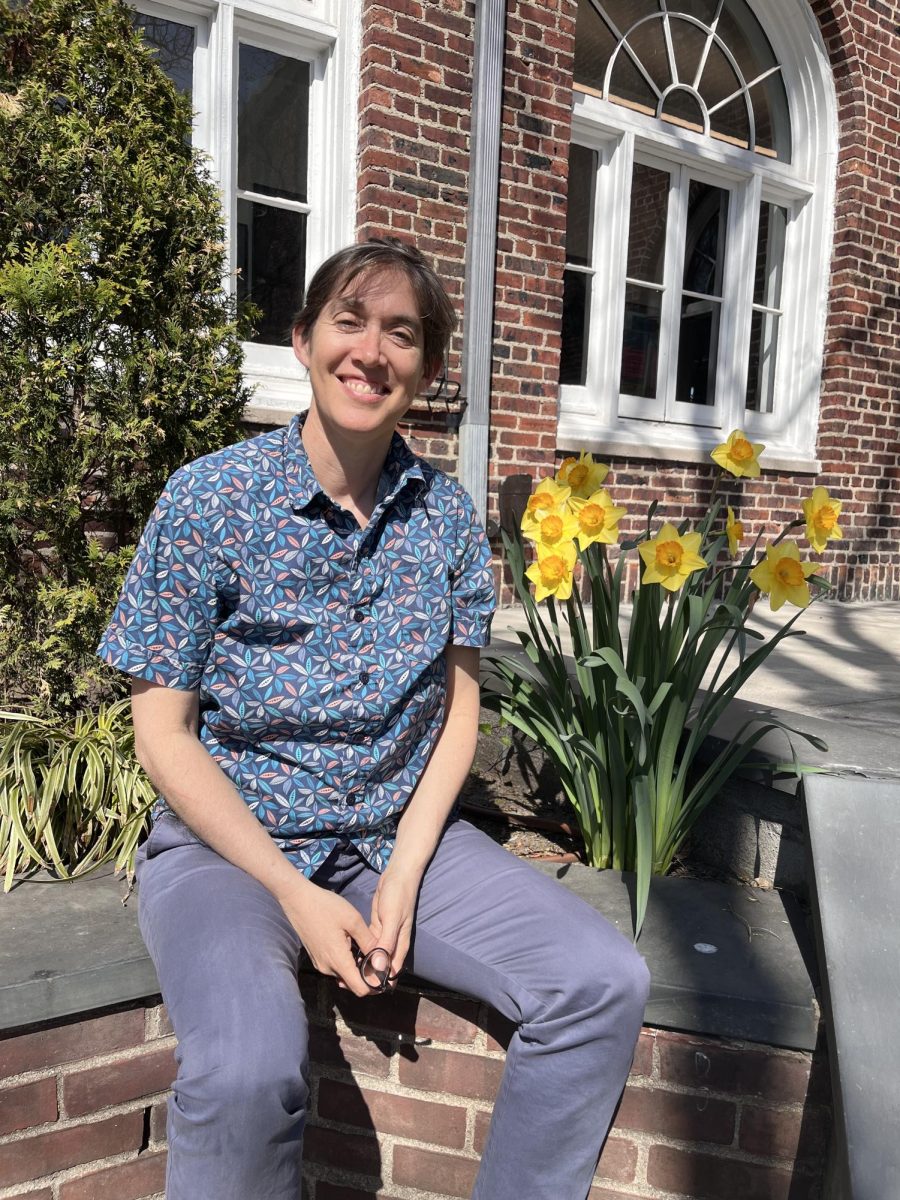
“We know that words sometimes lead to violence, and we’ve seen that recently,” said Assistant Head of School, Academics Michal Hershkovitz. “We’re in a moment of our history, both as Americans and globally, where it seems clear to us as educators that you all need to understand [the political environment].” As Head of Academics, Hershkovitz plays a key role in one of the many ways Poly approaches political events: through curriculum.
“One of the important responsibilities of creating a course is to ensure that the students…have [a] deep understanding of the seminal works in that field,” which can then be employed to analyze current events, according to Hershkovitz. In her own political science class, Advanced History Seminar: American Democracy at a Crossroads, this looks like teaching students about the foundations of American political systems and the different theories and discourses surrounding them.
If a current event is particularly proximate to the student body or relevant to the class subject, however, Hershkovitz said that teachers can address it directly in the curriculum. This occurred in her own class, where she developed a lesson about the recent killing of right-wing political activist Charlie Kirk, but not before waiting “two weeks until I found a place where it would naturally fit [in the curriculum] rather than stopping everything in its tracks,” she said. “It’s about balancing our responsibility to the curriculum…and our responsibility to [also] acquaint you with current events.”
However, Hershkovitz also adds that “all syllabi are selected by an individual teacher based on [their] expertise and experience,” and as a result, political discussions manifest differently across classes.
Although this flexibility should allow teachers to adapt to shifting political climates, some Upper Schoolers believe the opportunity for discussion isn’t being leveraged enough. While Zahaan Batliboi ’27 shared that each of his History 11: American History and Civics classes begins with a brief discussion of current events, Student Body President Anna Brandmeyer ’26 said that in her history classes, it’s “not often where students get a chance to express [their political opinions],” because of an overlimiting class schedule.
Despite experiencing more in-class political discussions than Brandmeyer, Batliboi also takes issue with the overall lack of designated current events curriculum. “The omissions from our current events curriculum are as meaningful as what we include,” he said. This is because the issues that aren’t discussed in class often go unrecognized “when a lot of kids don’t necessarily go out and look into current events on their own.”
In response to these concerns, Hershkovitz shared that teachers are limited by legal, curricular and time constraints despite often wanting to meet students’ demands. Poly’s non-profit status also prohibits teachers from “engag[ing] in partisan activities” such as endorsing political candidates, according to the non-profit collective Independent Sector. This makes political discussions even more difficult to navigate, as a teacher’s statement can be misinterpreted or misconstrued as partisan.
Hershkovitz further mentions that all activity must adhere to the school’s mission statement, which is to “prepare and inspire the next diverse generation of leaders and global citizens to act with intelligence, imagination, and––above all––character,” according to the Poly Prep Website. “If anybody’s wondering why we don’t do X, look at the mission,” Hershkovitz said.
Assemblies
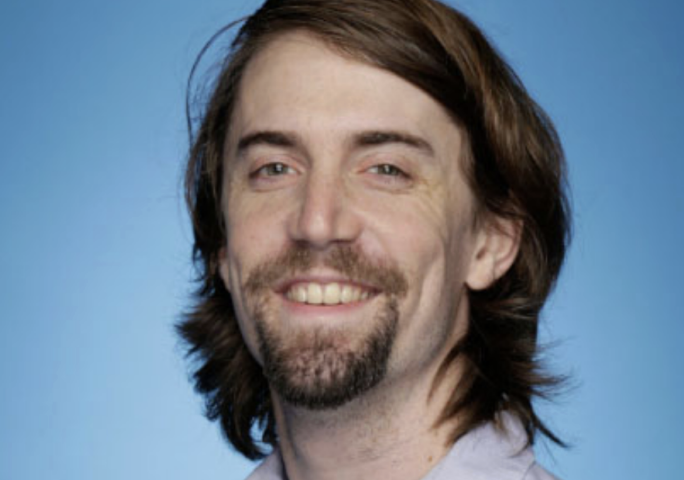
Beyond the classroom, Poly also attempts to address current events through Upper School gatherings and assemblies. According to Dean of Students Jared Winston, these spaces are used to emphasize unity by facilitating “conversation[s] centered around how we move forward as a community, as Poly, together, and not in a way that feels divisive” during otherwise contentious times.
Winston explained that assembly subjects are selected with “a finger on the pulse” of the student body, the Poly community, and the nation at large. Within the past five years, some of these subjects included the 2024 election results, the Israel-Palestine conflict following the October 7th attack, and Project 2025, a policy blueprint crafted by far-right politicians. In the context of the Israel-Palestine conflict, Winston adds that “the ethno-religious proximity our student community feels to the [event] was a bit more close to home” than other global conflicts, leading this issue to be discussed in assembly while others went unaddressed.
As for the content of assemblies, Winston mentions that “any sort of presentation around a controversial current event is considered with great care by various professional stakeholders and student leaders,” including Poly administrators and department chairs, to ensure a diversity of perspectives are represented.
Dr. Thomas López explained that third-party experts can also be hired as assembly speakers or informants “if we feel like we don’t have the skillset or the expertise on campus to help facilitate a difficult conversation,” or if faculty are “too close to a particular conversation” to avoid garnering speculation or having personal bias influence their statements. A Palestinian professor from Swarthmore College and an Israeli-American professor from University of Massachusetts, Boston were hired as third-party speakers for the assembly on the Israel-Palestine conflict.
Brandmeyer believes that these third-party sources can resolve some of her concerns with Poly’s fear of institutional bias, a flaw that she believes inhibits Poly’s ability to conduct nuanced political discussions in assemblies. “Current events assemblies [are often] very surface level because nobody wants to say anything with bias,” making it difficult to “learn about any of these really complex conflicts,” she said. “[But] outside speakers can come in not just [say] what they believe, but go deeper” due to their expertise.
Other students, however, believe this issue can’t be resolved solely by third-party guests. Ava Barbiere ’26 shared that even when “we have people come in and talk about Israel-Palestine and say ‘we all need to work together’…we never actually have a conversation about what that means.” Brandmeyer ultimately agreed with the sentiment that more could be done, imploring administrators: “Instead of just talking about how to have respectful conversations, let’s talk about the facts of the conflict.”
However, Hershkovitz shared that these issues stem from similar constraints placed on curriculum: time and form. “We never pretend that we are giving anyone all sides of an issue. That would be impossible,” she said. “What we are trying to do is give you enough diversity of opinion so that you hear differences and you become agile in thinking about issues as multifaceted,” so students can conduct the political conversations of their interest in other spaces. “This is a selection. It’s meant to show you how one might go about studying, inviting speakers, [and] promoting conversation, but it’s not…the be and end all.”
Public Statements
Outside the immediate Upper School, when current events mandate a more holistic approach, Poly will also issue public statements through the communications office or through various administrative positions. While this means of current events education is similar to assemblies in its attempts to reach a larger audience, its primary purpose is to both provide broader support during divisive events and reassert Poly’s core values in a shifting political climate.
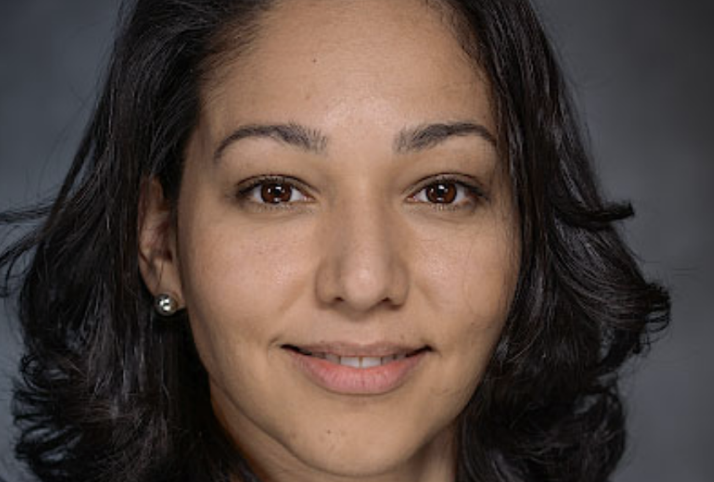
While Senior Director of Engagement and Communications Jennifer Slomack wrote in an email to The Polygon that “there isn’t a rigid, one-size-fits-all procedure because each situation is unique,” she explained that Poly’s public statements prioritize three overarching principles: impact, proximity and empathy. “We focus on issues with the clearest and most direct impact on our students, mission, or operations,” Slomack added.
Contrary to current events discussions held within the classroom or during assemblies, the Communications Department releases broad statements and does so less frequently because several other forums can better educate students in intimate settings, Slomack’s email continued. “We don’t respond impulsively or frivolously. We carefully consider what support will be most meaningful and lasting for our students so that we can take care of them.”
Dr. Thomas López corroborated this sentiment, sharing that “I don’t think it’s my place as Head of School to come out and say, ‘this is where we sit on this.’” Instead, she uses divisive times as “an important opportunity for me to talk about [Poly’s] values.” Hershkovitz clarifies these as “thinking deeply, considering as many opinions that are different from yours as you can consider…being discerning, [and] using your judgment.”
Moreover, in response to concerns about the depth of Poly’s political engagement, Slomack’s email shared that “we also know that some people’s points of view are much more nuanced and complex than can be conveyed in a simple letter,” however, “rather than trying to represent every perspective in a single statement, we focus on creating spaces for dialogue.” Following the October 7th attack, Head of Upper School Sarah Bates sent an email to the Upper School offering DEIB spaces for members of Jewish Affinity and the Middle Eastern North African Affinity to talk, an additional “Optional Student Forum,…[and a] History Department-led information session about the history of the Israeli-Palestinian conflict,” as a few of these spaces. 
Nonetheless, the Communications Department and the broader Poly administration remain open to receiving criticism. “Our job isn’t to avoid difficult conversations; it’s to be thoughtful, principled, and willing to learn from feedback in service to our shared mission and to one another,” said Slomack. “It’s a very complicated game and dance of what do I jettison, what do I substitute, how do I respond?” furthered Hershkovitz. “But it all has the same end, the same goal, and that is what we do every single day in every capacity as teachers: preparing you to meet the world.”