




















After returning home from preschool this January, five-year-old Liam Conejo Ramos and his father, Adrian Alexander Conejo Arias, were detained by Immigration and Customs Enforcement (ICE) agents in their Minneapolis driveway. Despite “‘following all the established protocols, pursuing their claim for asylum…and pos[ing] no safety, no flight risk,’” the father and son were torn from their home, loaded into a van, and sent to a detention center, all while Liam’s neighbors begged officers not to take them and his mother remained petrified inside their home, according to CNN.
Following Liam Conejo Ramos and Adrian Conejo Arias’s detention, NPR reports that “the image of the boy went viral and [has now come] to symbolize the children caught up in President Trump’s immigration enforcement operations.” These children are in the thousands; as of April, over 6,200 kids have been detained by ICE across the nation, according to the non-profit criminal justice publication, The Marshall Project.
The non-profit policy platform K-12 adds that these high rates of deportation partially derive from ICE’s increasing presence on school campuses, as the agency had been spotted on at least 13 school grounds from only a month after Liam’s arrest.
In spite of the issue’s growing prevalence, however, 42% of educators said that their school made “no response” to recent ICE raids, even when 50% claim that their immigrant students “have expressed anxiety/fear” of the agency, according to a survey conducted by education news outlet, EdWeek.
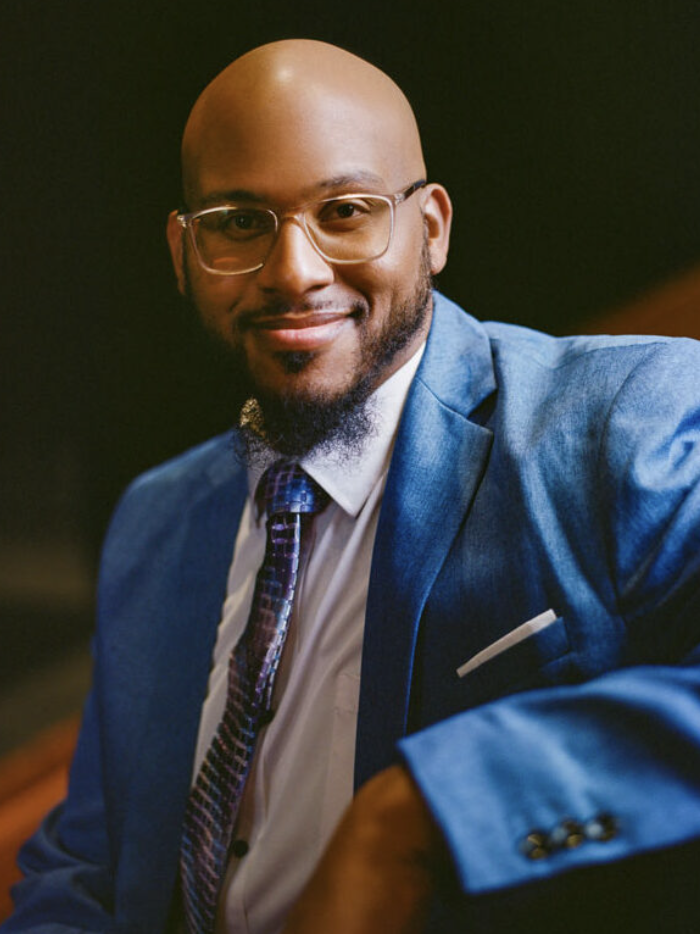
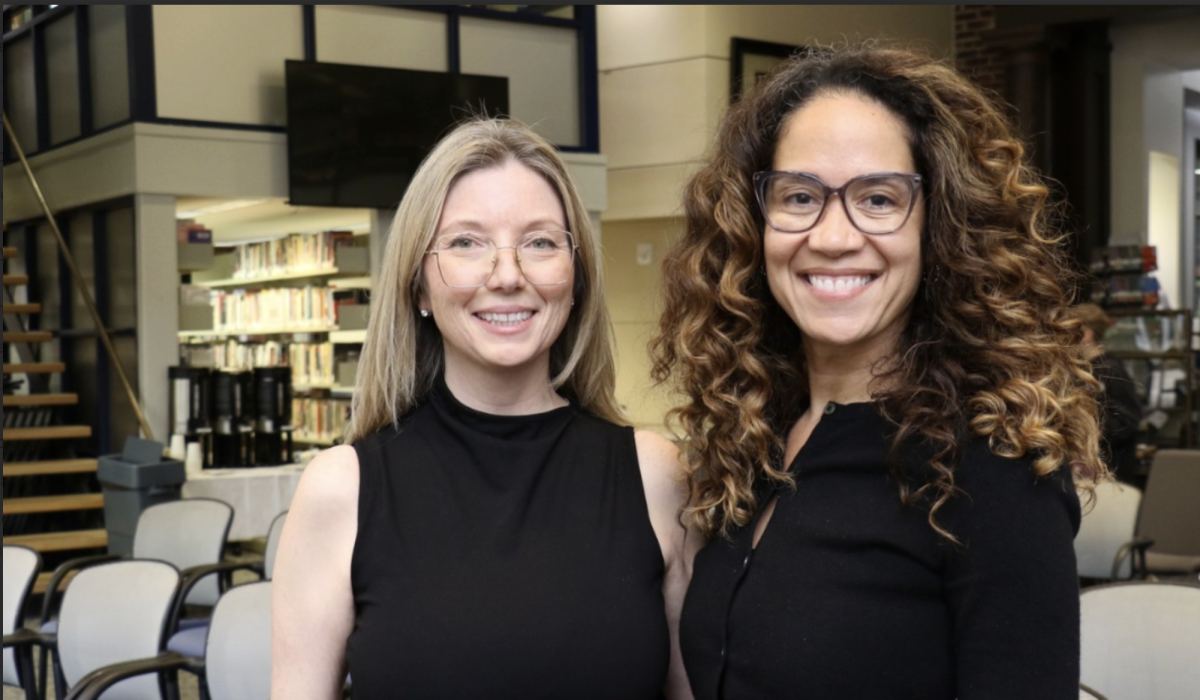
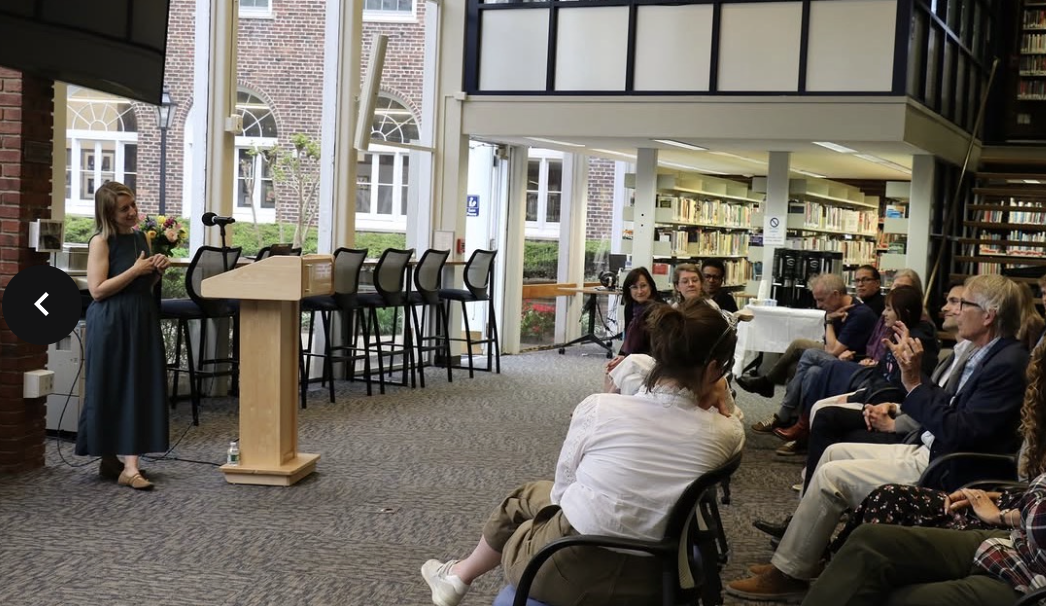
However, at Poly, Head of School Dr. Noni Thomas López shared that she has implemented several measures to prevent ICE from coming into contact with students, including clear private property signage, a designated security protocol, and several conversations with Poly’s lawyers. “We want to make sure that we’re doing everything we can to establish and make clear that an entity like ICE would not be able to come on campus without the proper documentation,” Thomas López said.
Poly students themselves, however, are interpreting the responses in several different ways. While some believe that Poly’s current measures provide sufficient protection and reassurance, others are concerned by the administration’s lack of public address, raising fears about their own safety. “Poly needs to formally address the presence of ICE and show their support of communities who are actively being hurt and terrorized,” said an anonymous Upper School student in response to a form sent by The Polygon this February. “Students want to see their administration supporting them.”
“Schools were once seen as places where ICE couldn’t come in, and that’s changed. So we just have to be ready for anything,” said Thomas López. For her, protecting Poly begins with preventative measures. “One of the first things that we want to establish simply through signage…is that [Poly] is a non-public area,” she said. She explained that because “ICE is not allowed in non-pub- lic areas” this minor detail not only deters them from trying to enter, but also implicates the legal warrants they would be required to have if they were to try to.
“If [ICE] got a judicial warrant that’s from a judge, that means [probable cause to search the premises or make an arrest has] been presented,” Thomas López explained. A judicial warrant would enable ICE with the authority to enter campus regardless of her consent. “But in most cases, ICE has not presented those kinds of warrants to come onto school grounds,” she said. Thomas López added that ICE will instead often provide administrative warrants, which are issued by the Department of Homeland Security rather than a judge. These warrants are not legally binding and do not require probable cause or evidence of criminal activity to be issued.
Regardless of which warrant is presented, however, Poly’s security members have been directed by Thomas López to follow a three step protocol to ensure students’ safety. According to Director of Security, Safety and Transportation Xerxes Vizcaino, this protocol is nearly identical to the one that the Board of Education suggests for situations regarding ICE. However, Poly’s ICE-related policies have no written or binding documentation, and ICE-related protocol came from a “general awareness” meeting with the Head of School, whose understanding stems from the guidance of the school attorney and aligns with the Department of Education’s guidelines, as they are both based on the law.
According to the New York City Public Schools website, the protocol Poly approximately follows takes three steps: first, contact the Head of School; second, do not provide any specific information about students or staff; and third, do not permit access to campus without legal warrants. Vizcaino adds that security staff were also told by administrators to contact a student’s family if they were to be detained, a slight adjustment from the Board of Education’s suggestions which makes the protocol more “suitable for our school.”
Vizcaino explained that after these steps are completed, however, authority lies in the hands of Thomas López, with further instruction coming from her and largely being situational.
If she were to be contacted in this situation, Thom- as López herself would also follow a pre-determined protocol; “what I would first do if ICE came on campus with any documentation is call our attorney,” she shared. “The attorney would direct us on what we should comply with [and] what we would not have to.” Thomas López explained she had already had discussions with Poly’s Chief Financial Operations Officer Monique Lopez and Poly’s attorney about what these directions may look like, concluding that her actions would be determined based on which warrant ICE presents. If a binding judicial warrant was presented, “we would legally need to comply with that,” or else Poly would be seen as obstructing justice or being in contempt of court. If ICE presented a non-binding administrative warrant, however, Thomas López asserted: “Poly would not comply [with it],” as they are not required by the law.
In spite of these security measures, however, several students still express that they are either uncertain, unaware, or frustrated with Poly’s stance on ICE. “I wish that [Poly] gave us more certainty of where they lie, so if a [raid] ever did occur, we would have their word and would be reassured of our safety, because…they do have affinity groups that…are touched by things that have been going on,” said President of Poly’s Hispanic affinity group (UNIDAD) and the Polygon’s Middle School Editor, Felipe Santiago. As the grandchild of Hispanic immigrants, he shared that at “Poly, I definitely don’t feel like I belong,” and Poly’s lack of formal public statements about ICE leave him uncertain about his community’s protection.
In their response to the Polygon’s survey on ICE, the same anonymous student expressed a similar discontent with Poly’s lack of official statements. “To be silent is to be complicit,” they said. “If Poly wants to claim the values of ‘diversity, equity, and inclusion’ as central to the identity of this school, the administration needs to speak up. If a school prides itself on those values, should that school not then adhere to and ensure the safety of those values when they’re needed most?”
Not all students impacted by ICE share these opinions, though. Freshman Christopher Velasquez is a member of UNIDAD who has family personally impacted by ICE. “I’ve had an uncle who tried to cross the border illegally, and my little brother — who was 11 years old at the time — served as his immigration lawyer,” he said. While he believes that many students “don’t really understand the severity of the situation,” Velasquez thought that Poly’s stance on the matter is clear: “Immigration as a whole, especially to this country, is really important, and ICE in itself is not good.”
In response to these varying interpretations, Thomas López herself shared that Poly hadn’t issued a statement about ICE because she believed the administration’s thoughts on the matter were self-evident. “In terms of making sure that ICE would not have any access to our campus without [proper] legal documentation, for us, that’s just clear, [as the law is clear],” she said.
Some students concur that Poly’s security protocol both reflects this sentiment and provides them with reassurance in otherwise uncertain times. “My biggest fear has always been being racially profiled, especially since it was made legal by the Supreme Court, and I happen to look very racially ambiguous,” said Junior Zahaan Batliboi, “[but] I think there’s enough people and security guards here that… I could never imagine a world in which [ICE] just came up and just dragged me into a van from Poly.”
Beyond security measures, Batliboi also feels a degree of protection at Poly because of how insulated many of the community members are from racialized persecution. “Poly in particular has a very small brown population, and is also extremely insulated by financial privilege and historical prestige, meaning that, at most, ICE raids only feel tangentially proximate to Poly’s community,” he said.
Thomas López also shared that ICE’s presence at Poly is “very unlikely. I don’t know one school here in New York, [an] independent school, where ICE has had the ability to come on campus.”
Nonetheless, she and other administrators have implemented safeguards to ensure that the community is protected in the case ICE enters school grounds. “This has always been a community that’s come together to support folks when they need it, and this would be no different,” said Thomas López.
If, in the rare case a member of the community were to be detained, Thomas López shared that administrators “would jump into action to make sure that the person had what they needed,” while also “keep[ing] the community informed, because they’re going to be worried for that person,…and [we’d] advocate for that person [to have due process and the rights entitled to them by the law] as much as possible.”
Thomas López concluded that at Poly, “[I] don’t believe that being undocumented should be treated as a crime.”