

























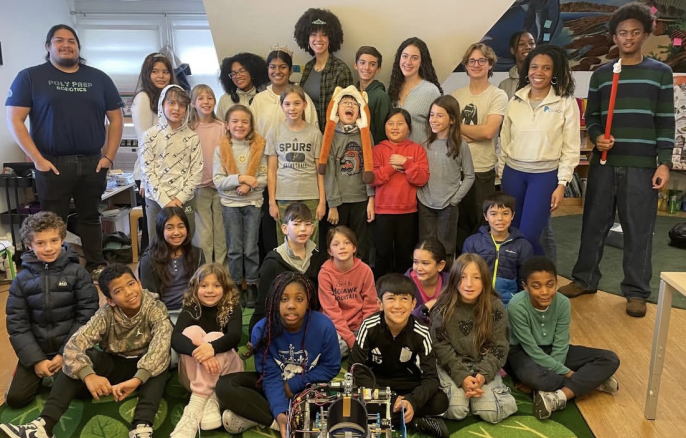
Poly Prep’s Robotics Team hosted a tablet drive from January 12 to 16 in order to provide iPads to children with disabilities in District 75, with donations delivered to P.S. 236. Leader of the drive, Junior Rose Filippazzo and Breaking News Editor of the Polygon, said, “[We] download assistive apps on them, like communication apps,” and “then we donate them to PS 236 in Mill Basin.”
The drive was organized and run by the Robotics Team, with Filippazzo leading. The team held fundraisers, refurbished the iPads and developed new apps to support the students who will receive them.
District 75 is a New York City school district that isn’t defined by geography, unlike other sectors. It was created for children with mental and physical disabilities who require an Individualized Educational Program, more commonly known as an IEP. “[An] IEP includes information about your child and the unique strengths and needs that are considered to develop a plan of the appropriate special education supports and services that will allow your child to access, participate, and progress in the general education curriculum,” according to the New York City schools website. The district specifically helps children with autism spectrum disorders, significant cognitive delays, emotional disabilities, and sensory impairments, according to the NYC District 75 page. The tablets would significantly improve the children’s ability to communicate.
Many students participating in IEPs require an aide for communication and basic tasks. The apps installed on these tablets will significantly improve children’s school experience, Filippazzo noted. For example, they can allow students to have faster-paced conversations by eliminating the need to write or type to communicate.
Computer Science Faculty and Director of Robotics Kristen Guynn said, “[Some kids have] low motor function, [and] there are constraints around anything beyond a large touch screen.” Providing these students with laptops or phones would only challenge them further as keyboards or small touchscreens would be too difficult to use. So, the iPads and assistive technologies can help children who have disabilities keep up with their peers, which “can help ensure that students with special needs develop positive self-esteem and the skills they need to succeed after graduation,” according to ISTE (International Society for Technology in Education).
Contributions didn’t just take the form of tablet donations: the community also purchased clothing from the robotics team to assist in fundraising efforts. Filippazzo wanted to leverage the Poly community’s resources to help people, explaining she had personal experience with children who had mental disabilities and knew how much technology helped.
“I think that we’ve been fortunate in this school that we have so much access to technology, and I don’t want to take that for granted.” She added that she doesn’t want the community to take its technology for granted, noting that old tablets Poly students would otherwise discard can play a key role in helping children with disabilities access the best education.
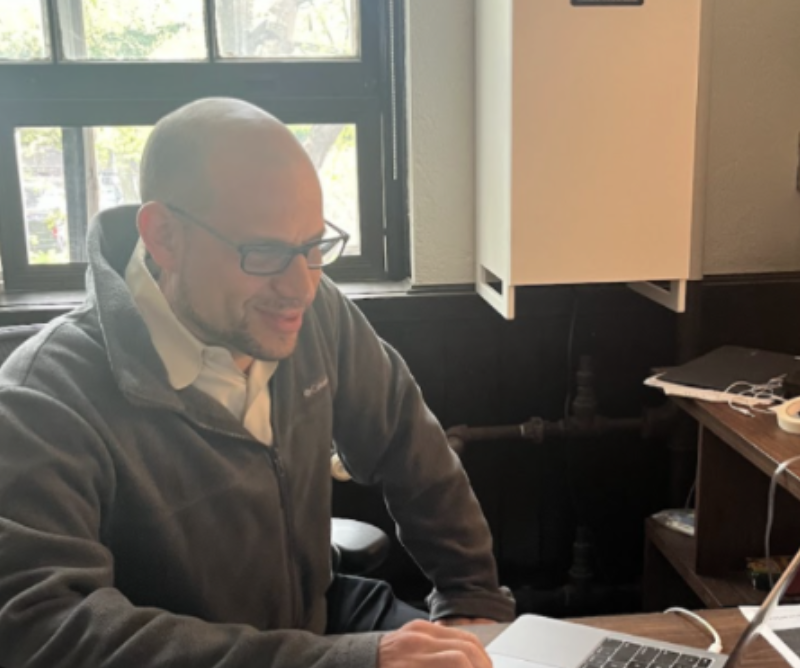
Director of Service Learning and History Faculty Elijah Sivin noted that although the goal was to support children with disabilities, the tablet drive provided Poly students with the experience and knowledge they needed beyond school. He added that the students taking part are role models who show that people don’t have to go over the top to make an impact.
To Guynn, there is something that can be taken and learned from this process. “The greater message is, ‘what are you doing with what you’re learning?’ And are you making an impact?” She wants Poly students to apply what they learn in school and make an impact elsewhere. Guynn ensures the members of the robotics team exemplify this initiative.