
































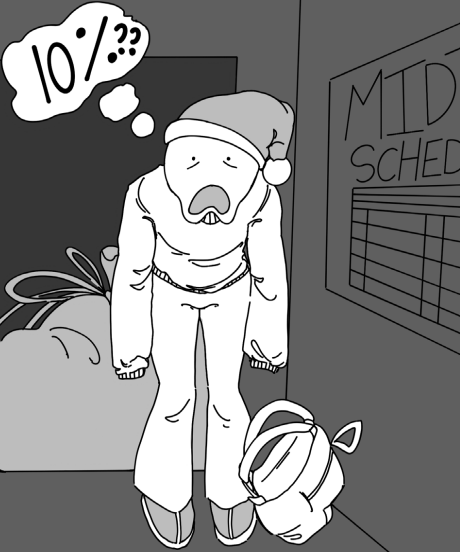
7 a.m., Monday morning: the dreaded alarm fills my previously quiet and peaceful bedroom. My body yearns for more sleep. “Just five more minutes,” I tell myself, but I know those five minutes won’t be enough. I promise myself, “You’ll get more sleep tomorrow,” knowing that when night comes, like so many other teens across the country, I’ll break that promise and stay up to finish another important assignment. While teens need eight to 10 hours of sleep, about 70-80% of them don’t get it, according to Johns Hopkins Medicine. There is an epidemic of chronic sleep deprivation, yet it is treated as if it is a normal part of being a functional member of today’s fast-paced society.
According to Mayo Clinic, a non-profit medical center, prolonged sleep deprivation can have detrimental effects on one’s physical and mental health, such as an increased risk of sickness, obesity, high blood pressure, diabetes, stroke, heart disease, depression and anxiety. While you are sleeping, the immune system produces proteins called cytokines, which are vital for helping your body fight infections and inflammation and handle stress, according to the National Library of Medicine. When you don’t get enough sleep, your body does not have time to make these proteins and becomes more susceptible to such physical and mental complications. In addition, sleeping the recommended number of hours helps your brain maintain cognitive skills such as attention, learning and memory, according to Columbia University Department of Psychiatry. When these skills aren’t maintained, it can be hard to cope with even the most minor stress.
Not only can sleep deprivation affect your health, but for adolescents it can permanently hinder the development of their brain. According to the National Library of Medicine, throughout adolescence, the prefrontal cortex is developing up until your mid-20s, forming the neurological connections that someone will likely have for the rest of their life. Since these connections are so imperative, adequate sleep is essential to ensuring that they fully form. Therefore, if you don’t get proper sleep, you could inhibit the development of your prefrontal cortex, and develop chronic emotional dysregulation, causing intense emotional outbursts and accelerated brain aging, which causes certain parts of your brain to deteriorate more quickly. This would impair your ability to succeed in school, make and maintain meaningful relationships, and increase the risk of mental health issues in adulthood.
Oftentimes, the amount of sleep people get each night is seen as a measure of productivity and success. As a result, people stay up later in order to feel as if they are working harder than those around them. However, this is extremely dangerous, given the extreme physical and mental effects sleep deprivation has on everyone, but especially teens. But if it is so harmful, why do people do it in the first place? Harvard Business Review shares its opinion on the matter: “We often experience a greater sense of our own value when we’re working than we do when we’re not. Working is not just a way to stay busy, but also to prove our worthiness — to others and to ourselves.” Therefore, admitting to others that we get enough sleep almost feels like confirming our biggest fear: that our life is worthless.
Today, there is so much noise surrounding what it means to be successful, but if you want your life to be the best it can be, you must find ways to ignore this noise. Separate yourself from the competitive nature of society, learn to celebrate the person you are, regardless of your academic and athletic achievements, and the next time you make a promise to yourself to get more sleep, honor it. Your brain will thank you in the long run!