









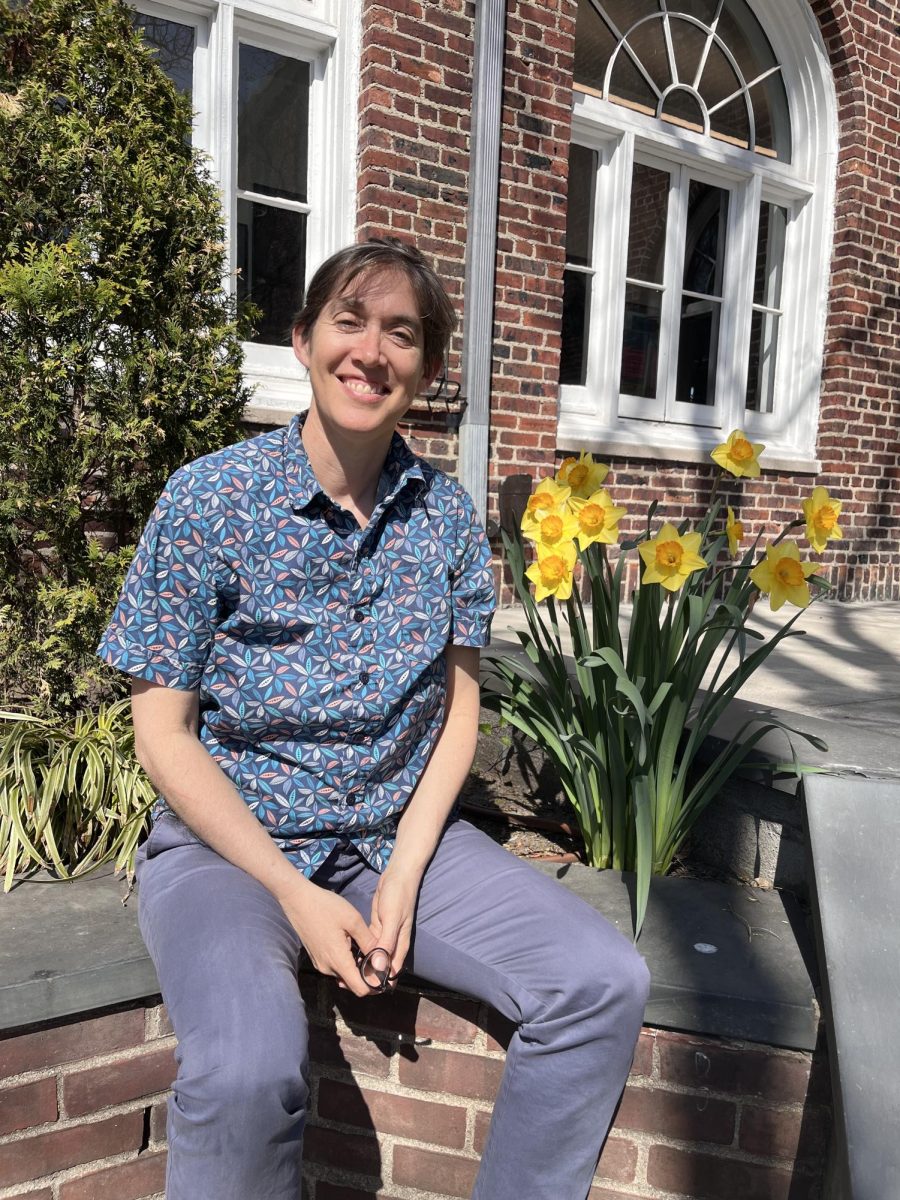
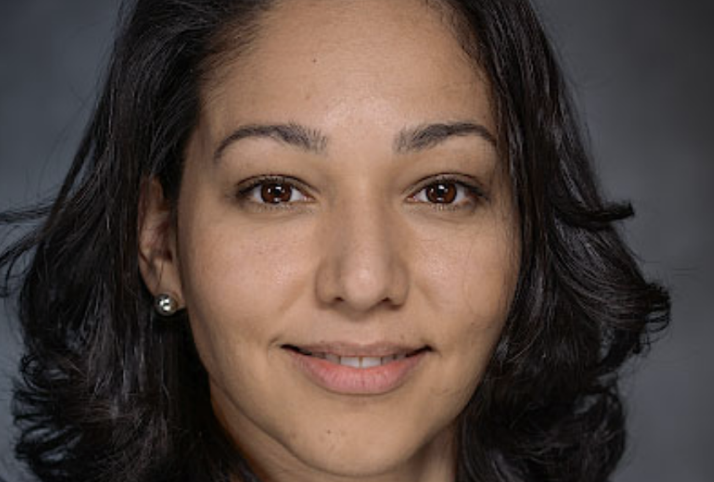







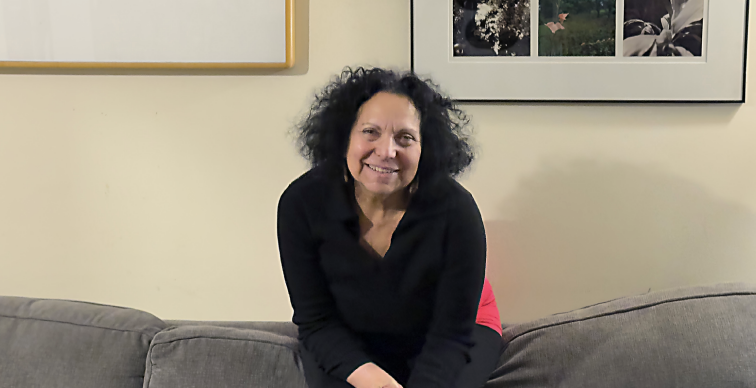
In 2019, Poly needed an art teacher who could build a photography program from the ground up. Now, nearly eight years later, Adina Scherer is retiring and leaving behind a fully equipped digital lab, a working darkroom, and a program she designed from scratch.
Beginning her career in Massachusetts, she worked at the New England School of Photography. She started by running the “equipment cage,” where she learned to manage cameras and gear, before quickly moving into teaching black-and-white and color film photography, darkroom development, slide production for professional presentations, and even complex dual-slide projector shows. Scherer taught nighttime classes at the school from 1983 to 2007. Simultaneously, she was teaching at the Massachusetts Institute of Technology (MIT) , inside their newly opened Media Lab. There, she taught color and black-and-white photography while managing a small darkroom for Media Lab art students. Her lab was led by a pioneering graphic designer, Muriel Cooper. “I feel incredibly privileged that over the course of my career, I have worked for some incredibly inspiring women,” Scherer said. Cooper, she described, was “eccentric and creative and dynamic” and allowed Scherer to commence her career with her “first big teaching experience,” running the Visible Language Workshop (VLW) while only in her twenties.
Coinciding with the emerging world of digital thinking was the creation of digital art in the Media Lab at MIT. “[It] was a huge thing, the MIT students were essentially inventing digital photography.” They worked with early Macintosh computers called Amigas (art-making computers that no longer exist), Sun computers, and they collectively worked on a giant central machine they called “the Mona Lisa.”
After earning her MFA at the Rhode Island School, Scherer taught evenings at Northeastern and worked full-time at the Dana Hall School for Girls in Wellesley, Massachusetts. At Dana Hall School, under female leadership, Scherer expanded her career from teaching photography to teaching disciplines such as painting and drawing. “There, I fell in love with teaching high school. Teaching young minds really helps me feel like I am making a difference in our world,” Scherer said. Consequently, she returned to school, attending the Massachusetts College of Art, to earn a master’s in art education.
After briefly teaching elementary school art in Boston, Scherer became a Manager of Youth and Family Learning at the Museum of Fine Arts. There, she designed art history and art-making programs, expanded accessibility for families and children to create and experience art, supervised 20 teachers and developed teen internship programs that trained public school students to give gallery tours and lead art programs in libraries across the city. “It was so exciting. In the teen internship program, I got to watch these young people come into themselves, become good public speakers while leading tours, and learn more about art and art history. I’m still in touch with a couple of teens who are now around their late 30s who were in that program. They have these professional lives, and it’s just so wonderful to see them all grown up.”
When the museum redirected funding toward constructing a new building, eliminating the youth and family program, Scherer chose not to transition into adult programming. “I didn’t want to work with adults… I was and am all about the kids,” she said. So, Scherer returned to teaching high school art in Boston’s public schools.
After moving to New York City and remarrying, Scherer chose not to recertify to teach in public schools in the new state. She had worked at the Brearley School for two years when she saw a job listing at Poly seeking someone to teach general art and create a photography program. “My husband said to me, ‘They’re looking for a unicorn—and you are it,’” she recalled. “Who could teach middle school art, high school art and develop a photography program from scratch?”
In her first year at Poly, Scherer laid the groundwork for the school’s photography program with six desktop computers, two printers and six students. In the foundation art classes she taught, students experimented with cyanotypes using images taken with cell phones. “I had everyone send me their cell phone pictures,” Scherer explained. She converted the images into Photoshop files and printed them as negatives. Those negatives were then used to create cyanotypes, an early photographic process that uses sunlight to develop images. The goal, she said, was simple: “We did that the first year just to get people interested in the possibility of photography.”
When COVID-19 hit, Scherer was determined to keep students engaged in photography. Classes moved online and Scherer taught students to edit photographs on their phones using Snapseed. When students came back, and the program could truly gain traction, it was not without challenges. “We hit all kinds of little bumps in the road, like hard drives would crash and students would lose their work,” said Scherer. Conversations with development concluded with a transformative donation from the David Maris family. “With the money that they donated, we designed and built this lab. Now we have 20 desktops and 20 dedicated printers, so every student can print while they’re working. I modeled the design after the setup of the International Center of Photography, where I had learned all my digital work.” Later, our inspiration, the ICP, also funded the program, manifesting in a dark room. Scherer and Head of Technology Charles Polizano later designed the darkroom space. Because much high-quality darkroom equipment is no longer manufactured, Scherer spent much of last year sourcing cameras, lenses, reels and tanks on eBay. “You can’t buy any of it new,” she said.
Originally planning to retire in 2025, finishing the dark room became one reason for her delay. Another reason was the hiring of Poly’s very first female head of school. Having spent her career mentored by inspiring women, Scherer wanted to complete her career “full circle.”
“I always think about the song ‘Take a Chance on Me,’ because they had this idea and they took a chance on me!,” said Scherer reflecting on her time at Poly. “I’m leaving Poly with this complete completion of my life,” she said. “I started at the Media Lab at MIT, where we were inventing digital photography with a computer we called the Mona Lisa and now I’ve built a program with both digital and a darkroom.”
From DARPA net and early Macintoshes to Snapseed and 20-station labs, Scherer’s career traces the evolution of photography itself. At Poly, she not only leaves behind heaps of carefully selected equipment and an entire curriculum but a program crafted with four decades of experience, passion and love.