






















What started as a service event turned into a record-breaking display of community spirit. Over 70 volunteers participated in the February Packout Day, emphasizing the prominence of Poly Prep’s service-learning traditions.
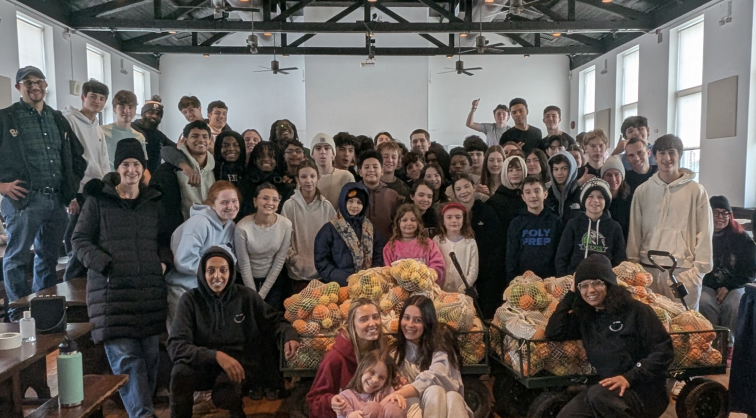
On the morning of Saturday, February 7, students arrived on campus to participate in Packout Day. The morning was filled with the lively energy of students and family, as assembly lines packed bags of food for shipment to community fridges.
“Packout Day is when students, parents and faculty gather and put food in bags going down a line,” according to senior Ellie Warwick, Co-Leader of the Local Food Insecurity Service Learning Team (SLT) and Polygon Social Media and Online Managing Editor.
The day was divided into parts to help the packing process go smoothly. First, volunteers sorted the food into categories. Then, “when the majority of people had arrived, we systematically put food into bags, like apples, bananas and some bread,” said Henry Crowley ’26. Finally, the bags were loaded into cars and driven out to local community fridges.
Packout Day started during COVID in partnership with One Love Community Fridge, a nonprofit organization that “works to eradicate hunger, food insecurity, malnutrition and the stigma associated with all three,” according to their website. According to Director of Service Learning, History Faculty Elijah Sivin. “We started working with them during the pandemic because most of our other kinds of service were not workable. But, [One Love] was stocking fridges directly outdoors,” so students were able to follow safety guidelines.
Poly and One Love hold three delivery sessions together per year, according to a Brooklyn Eagle article from February 11. Sivin has noticed that this relationship isn’t one-sided; it provides mutual benefit to both communities. While One Love supplies the food, “[Poly] offers space and logistical support.” Sivin emphasized the intellectual experience that partnering with One Love brings to Poly: “Very often when we’re doing service for somebody, it’s at least as much a favor to us that the place is creating an experience with kids.”
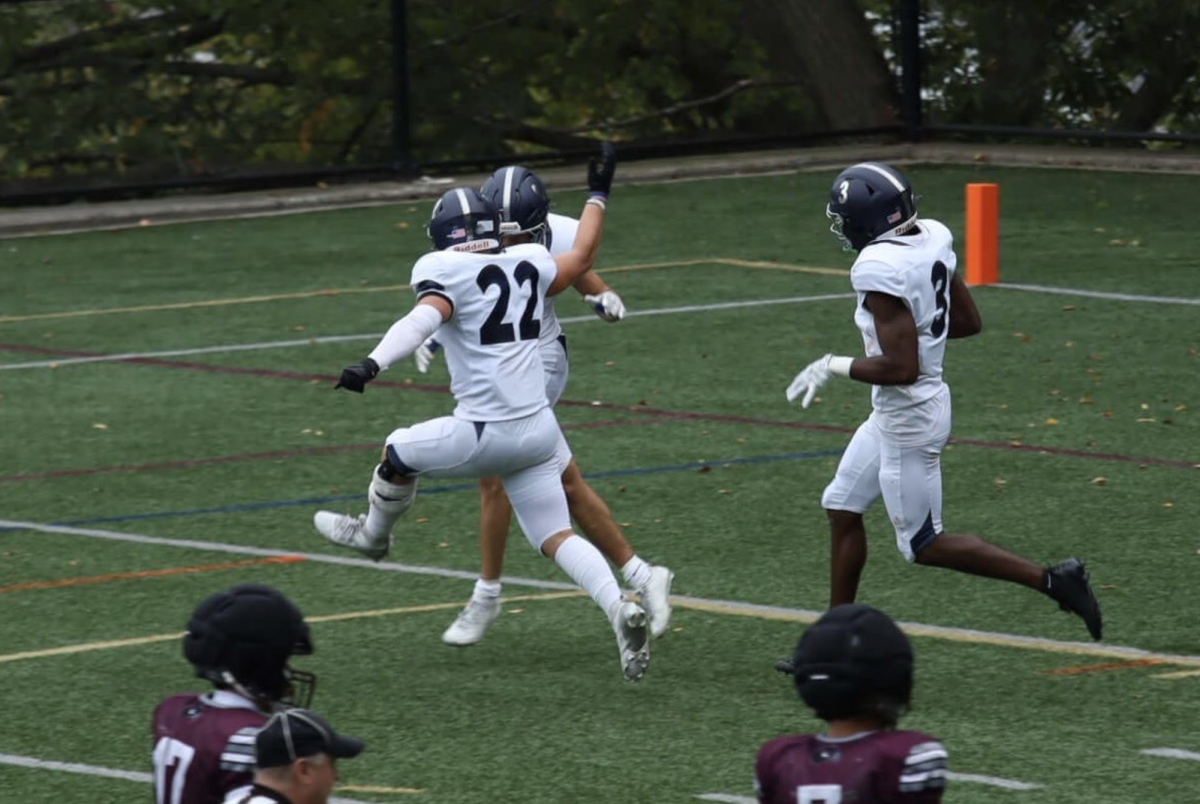
Going into this year’s Packout Day, Warwick and Senior Co-Leader of the Local Food Insecurity SLT Harper Giskan wanted to increase community turnout, and they worked to get the football team to attend. “The way to get more traction around something is to combine it with sports,” Warwick said. The leaders were able to get the football team to show up by using the team’s service point system, which rewards players for their athletic commitment and community service. “You usually get two points for doing a basic workout, and you had 20 points for doing this,” said Sivin. In all, “there were probably 25 or 30 football players,” said Crowley, a member of the football team.
With a combination of the football team’s attendance, other sports teams, arts performers and families from both Poly’s Lower, Middle and Upper Schools, Packout Day had a record-breaking turnout this year. “It’s definitely the biggest one we’ve ever had in terms of participation. Also, in terms of bags of food, we did something like 650 bags,” said Sivin. “In the end, we had about 75 people show up, and that was more than we ever had before.” Warwick appreciated the turnout from her community and recalled her favorite part of the day: “seeing kids that you wouldn’t expect to be there.”
Despite its overarching success, however, Packout Day faced the challenge of emphasizing its educational goals. After the bags were packed into vehicles, the leaders planned to hold presentations and workshops on the importance of addressing food insecurity. “We wanted more [students to] actually learn about the facts. Like a food swamp,” said Warwick. A food swamp is, according to Healthline, a “neighborhood or geographic area with a greater concentration of outlets that sell less nutritious foods, such as fast food and snacks, than outlets with more nutritious, minimally processed options.”
Warwick explained that this was because “We didn’t really push out clearly ahead of time that all the kids had prepared some workshops.” As a result, many students and families left immediately after the bags were packed, skipping the educational part of the day. Next year, the leaders plan to hold the workshops first. “Figuring out a way to work some educational moments smoothly is important,” Sivin said. According to him, a Packout Day’s goal is not just to pack food but also to understand the impact of community involvement. “You know you’re giving food to someone, but why do we need to do this?” said Warwick.
Learning why service is important is a beneficial lesson for any volunteer. “Through service-learning, students learn to reflect on their experiences and develop critical-thinking skills,” reported the Wisconsin Department of Public Instruction.
In the future, Sivin and the rest of the leaders hope to preserve the cheerful atmosphere of Packout Day. “Packout Days have a really positive vibe,” said Sivin. “So I definitely want to hold on to that.” According to him, the successful turnout and feeling of togetherness created at this year’s Packout Day is proof of Poly’s community values, and service continues to be a defining part of Poly culture. “When a community comes together by choice, that says something about who the community is,” said Sivin.