
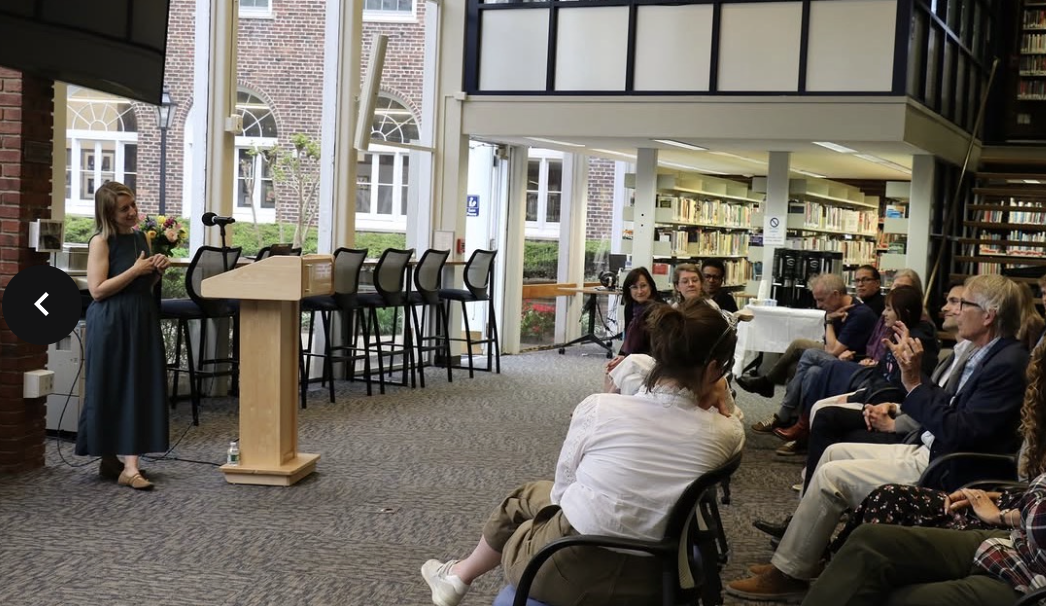










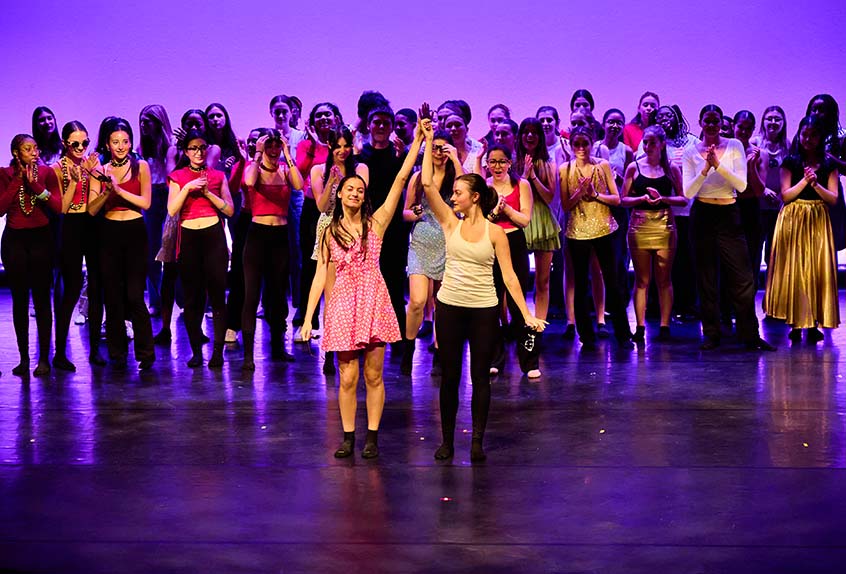








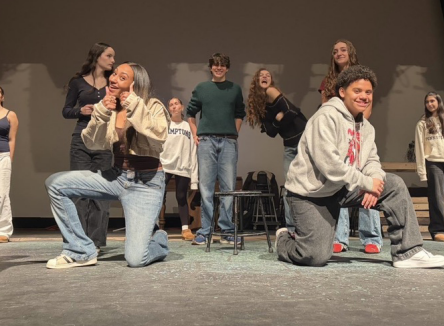





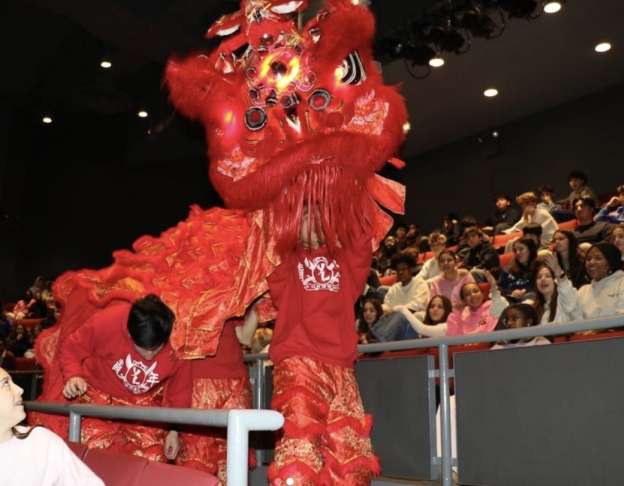


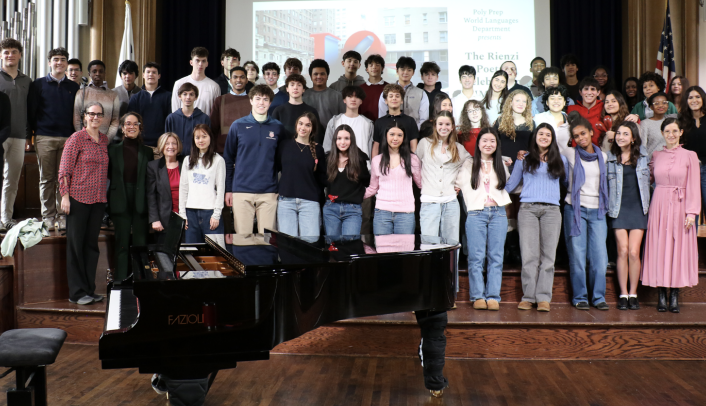
The word “love” is different in many languages, but this year, on March 4, 2026, at Poly Prep’s annual Rienzi, students were invited to understand love through poetry, music and videos. Rienzi is a tradition where the Poly Prep community listens to a select group of students recite poems, present videos, or sing songs in different languages.
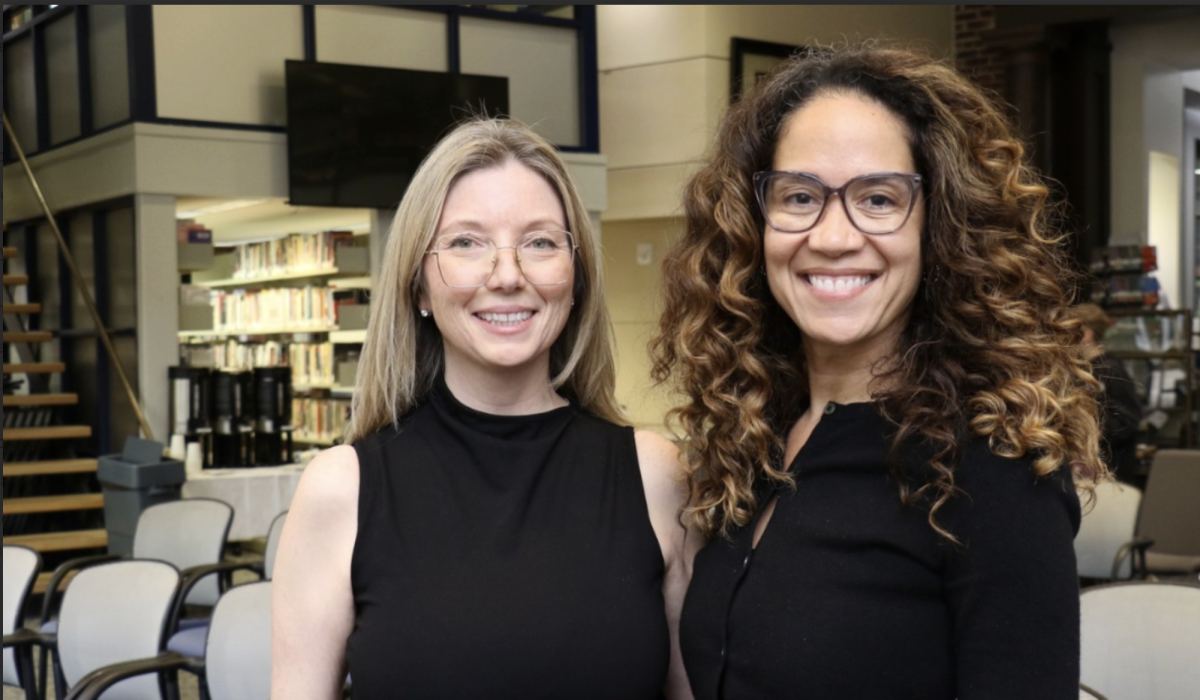
Each year, the assembly is centered around a new and specific theme chosen by the members of the Language Department, and this year Rienzi’s theme was love. The Rienzi took inspiration from Poly’s Bearns competition—which began 22 years ago and has since ended—where students recited poems in English. The Language Department created their own Bearns, named after Kathy Rienzi, a former French teacher at Poly. Spanish faculty member Maité Iracheta organizes the Rienzi showcase each year, along with help from World Languages Department Chair Elisabeth Mansfield.
Rienzi helps students deepen their understanding of the language they are learning. Iracheta said that she and other language teachers “are trying to develop in our students that ability to see, to hear, [and] to understand beyond what the surface says.” Iracheta believes that Rienzi is a great opportunity to “use the scale of our memories, and memorization. [She] feels that we don’t have many opportunities to do that, especially in a language other than your mother tongue…that appreciation for poetry and for your own voice to communicate that, is valuable.”.
The process for choosing the theme for Rienzi each year heavily relies on the state of the current world. “If there are too many conflicts in the world, politically or something like that…maybe right now, love is a good thing to share and talk about, because we might be needing it more,” she shared.
Iracheta also believes that the process for preparing the students for Rienzi is crucial. She usually starts by “asking them to start memorizing the poem and presenting, so that [they] can work also on [their] presentations. Some kids are really afraid of speaking in front of others. For me, it’s very important to develop that skill. And for those that have stage fright, I try to coach them and give them strategies.”
She also tries to make the poem she chooses relevant to her students, saying “[I try] to see which one fits better to the units that we’ve been studying so far, and the vocabulary and the grammar.” Iracheta believes in preparing the students through analysis, showing students “how to analyze the point, how to analyze the structure of a poem in the form, and, what it says, because poetry sometimes is elusive.”
Mansfield described the process of Rienzi selections and who performs, saying “the teachers choose who did the strongest jobs in their classes. They send them to the semifinals, and then the students present,” usually in front of the teachers who teach that language, “then the teachers talk about it and make a decision.” The process for organizing, preparing students, and choosing presenters not only affects the teachers, but students who perform also find the process interesting in a different way.
Vassia Yatrakis ’28 was selected to present her video at Rienzi. She said that “preparing for Rienzi was pretty stressful because [she] didn’t have time to complete [her] video until the night before.” Yatrakis also comments on “the social aspect of having to present your work in front of a class that could hate it or love it.” The process for Yatrakis was different because she “only present[ed] the artwork [she] made for Rienzi, not an actual video.” Yatrakis believes that Rienzi is an important tradition because it “speaks to what makes Poly a great community. For many, it’s a chance to share one’s culture or hard work. It’s sparked many conversations about culture and heritage, reminding me of how diverse our student body really is.”