






























What led the United States to attack Iran? To prevent Iran from building nuclear weapons? To destroy the political regime? To counteract an expected attack? Several different reasons have been offered as to why the U.S. decided to initiate the war with Iran, yet many contradict each other. Additionally, the war’s end goals currently appear unclear, with no singular explanation from the American government. Just weeks after the first attack on Iran, the war quickly began to escalate and involved several other Middle Eastern countries, such as Lebanon. Countries worldwide are also experiencing the outward economic effects of the conflict as passage through the Strait of Hormuz, a vital waterway for global oil shipping, has been restricted, according to The New York Times.
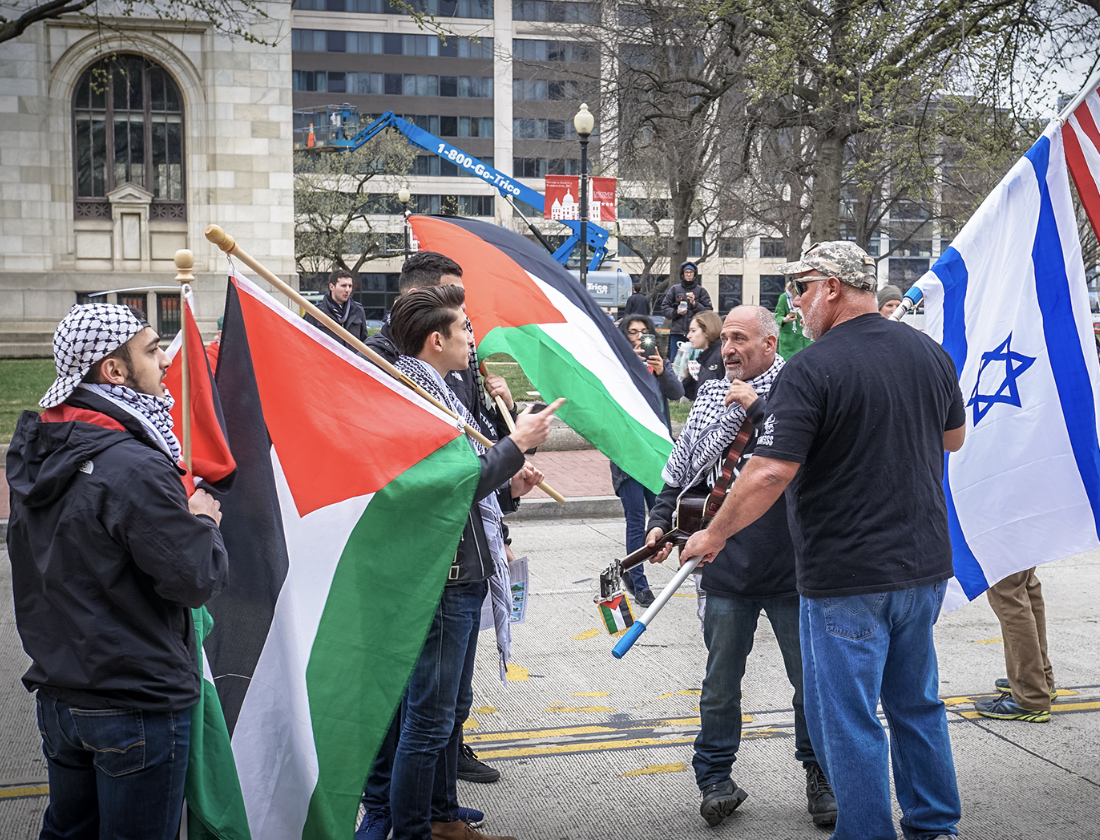
On February 28, the U.S. and Israel began their coordinated attacks against Iran. The U.S. and Israel have been allies since the official formation of Israel as a nation in 1948. Israel is one of the U.S.’s largest supporting nations in the Middle East, and the U.S. provides economic and military support to Israel, explained Michael Eisenstadt, director of The Washington Institute’s Military and Security Studies Program, for The Washington Institute. Eisenstadt also added that the two countries also tend to share similar democratic views.
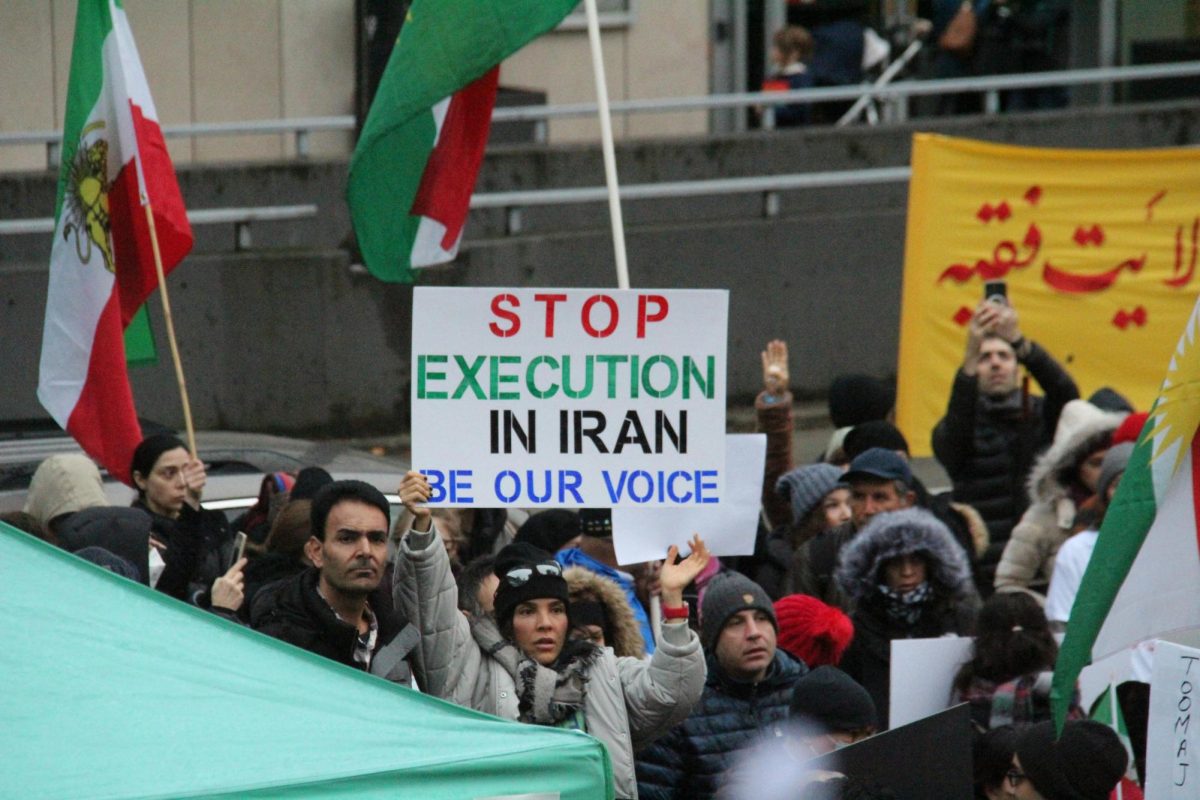
In a much different relationship, both Israel and the U.S. have been at odds with Iran since the Iranian Revolution in 1979, when Shah Mohammad Reza Pahlavi was overthrown. Ayatollah Khomeini took over and established the Islamic Republic in Iran, which resulted in a shift from a friendly relationship between the Shah and the U.S. to an Iranian government that strongly opposed Western influence, the Ohio State University explained. Khamenei became the second supreme leader of the Islamic Republic following Khomeini’s death in 1989. Ayatollah Khamenei in particular held a firm anti-Western perspective throughout his rule: “His worldview was shaped by animosity toward the United States, which he called ‘the great Satan,’ and Israel, which he described as ‘a cancerous tumor that must be removed,’” reported Alan Cowell, a foreign correspondent for The New York Times.
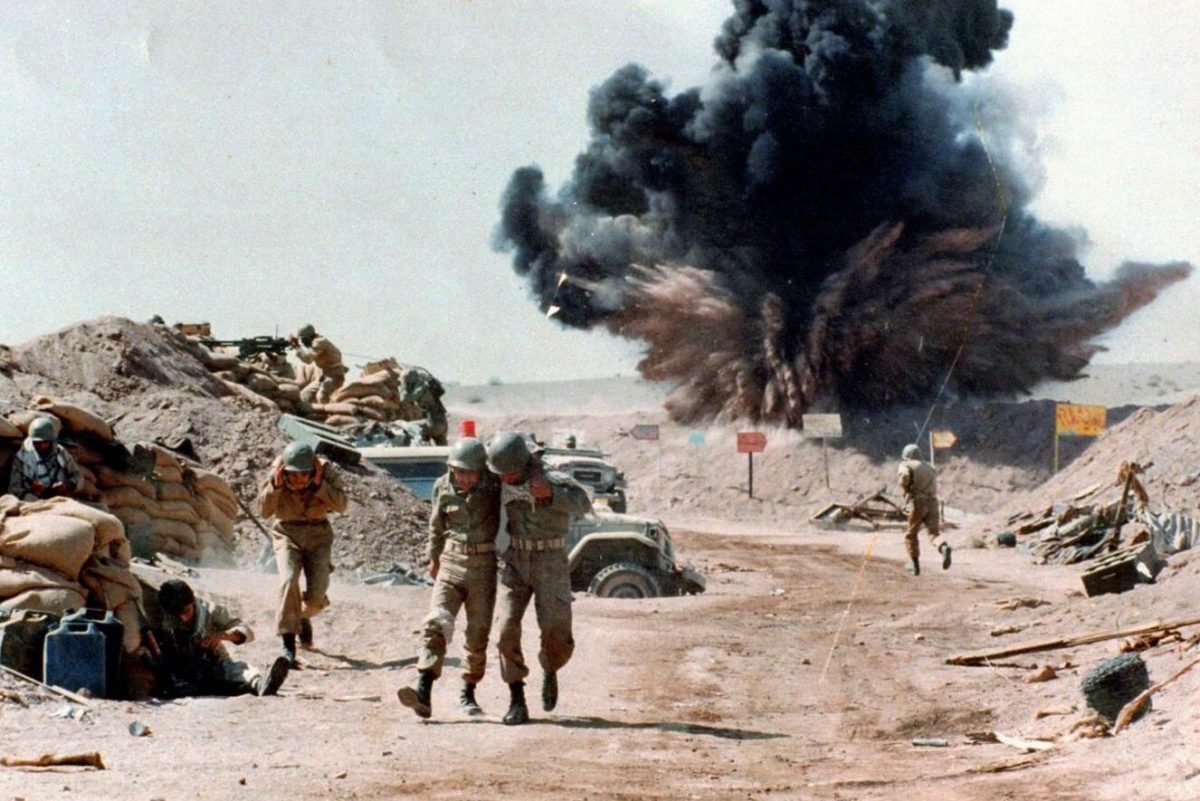
The attacks on the first day of the war killed Supreme Leader Ayatollah Ali Khamenei, which President Trump announced on social media and Iran later confirmed, according to The New York Times. Multiple other important Iranian government officials were also killed on this first day, including Ali Shamkhani, senior advisor to Ali Khamenei, Mohammad Pakpour, commander of the Islamic Revolutionary Guard Corps, Aziz Nasirzadeh, Defense Minister, and Abdolrahim Mousavi, Chief of Staff of the Iranian Armed Forces, said The Times of Israel. Iran responded by firing towards Israel and nearby American bases, mostly within the Gulf Cooperation Council (GCC) countries — a union of six Middle Eastern nations — which were primarily targeted by Iran due to their ties to the U.S. in the form of American security support. However, many of these retaliatory missiles were intercepted and few casualties have occurred in these countries, according to the BBC.
Lebanon also became involved in the war on March 2, when Hezbollah, a militant group that operates in Lebanon and is allied with Iran, struck Israel. The country became a point of disagreement when a ceasefire was first put in place, a bit over a month into the war, amid confusion over Lebanon’s inclusion. “ Lebanon is not part of the ceasefire that has been relayed to all parties involved in the ceasefire,” White House spokeswoman Karoline Leavitt said to reporters, according to Al Jazeera. However, Al Jazeera also noted that Pakistan, which is mediating the war’s peace talks, said that Lebanon was included.
But why the U.S. and Israel launched these attacks in the first place is still quite unclear due to conflicting claims, even many weeks into the war. The initial aim of the attack on Iran appeared to be an attempt at encouraging the Iranian people to take over their government by sparking rebellions against the political regime. Trump’s desire to overthrow the regime is driven by the long-standing animosity between the U.S. and Iran, with Trump calling the Iranian government a “terrorist regime,” The New York Times reported. In fact, at the start of the war, President Trump declared to Iranians in an address, “Take over your government: It will be yours to take.” However, while the attacks succeeded in killing the supreme leader and destabilizing the Iranian government briefly, Ayatollah Ali Khamenei was soon replaced by his son, Mojtaba Khamenei, and the government is still operating.
Trump also outlined another vision for Iran’s government, different from his suggestion of a government takeover by the Iranian citizens. He said that he envisioned “an outcome similar to what he engineered in Venezuela, in which only the top leader (Nicolás Maduro) was removed during an American military strike and much of the rest of the government remained in place, but newly willing to work pragmatically with the United States,” wrote Zolan Kanno-Youngs, a White House correspondent, in an article for The New York Times.
Some have said, though, that this idea may be unrealistic and unlikely for Iran. Kanno- Youngs added that “[Trump’s statement] implied that what worked in Venezuela would work in Iran, a nation with about three times the population and a military and clerical leadership that has ruled with increasing repression since the 1979 revolution.” Moreover, since the start of the war, so many of Iran’s top government officials have been killed that the option of keeping everyone except for Ayatollah Khamenei has already been eliminated.
Another suggested motive for the attack is to inhibit Iran’s nuclear capabilities. On March 2, Secretary of War Pete Hegseth claimed that Iran was building a “swelling arsenal of ballistic missiles and killer drones,” to “create a conventional shield for their nuclear blackmail ambitions,” CBS said. History Faculty AJ Blandford, who recently led a History Talk about the events in Iran, explained that there hasn’t been a consensus on the truth of this claim: “There’s been talk [from the government] about stopping the nuclear program. There had been suggestions that the program had already been destroyed previously by bombing last June. At the same time, many inspectors suggested that the program wasn’t really as far along as it was claimed to be, so it’s hard to know if that’s really the justification.”
In yet another differing explanation for the attack, Secretary of State Marco Rubio said that Iran was already planning an attack on Israel. Rubio claimed that “we knew that that would precipitate an attack against American forces,” CBS reported, leading the U.S. to strike Iran first. However, at the same time, Virginia Senator Mark Warner said on CNN’s “State of the Union” program that “I saw no evidence that Iran was on the verge of launching any kind of preemptive strike against the United States of America.”
Despite this lack of a clear objective, attacks from both sides of the war continue and intensify. At least 3,375 have been killed in Iran, 26 in Israel and 13 Americans, along with tens of thousands — mostly Iranians — injured, according to Al Jazeera as of late April.
When the war will end is still unknown, as it has already surpassed President Trump’s original prediction of “four to five weeks,” which he made to Kanno-Youngs in a phone call for The New York Times on March 1, three days into the war. Furthermore, the economic effects of the war have been felt globally as the U.S. and Iran fight for control of the Strait of Hormuz, which carries a major portion of the world’s oil and gas supplies. Junior and Polygon Arts Editor Neeka Aghazadeh, who has family members in Iran, reflected on the uncertainty and worry surrounding the war, sharing that “I think it [the war] started off with the excuse of separating the Iranian people from the regime. But it’s kind of turned into this thing that’s like, was that really the plan or was it just to destabilize another country?”